Summarize this article with AI
In Brief
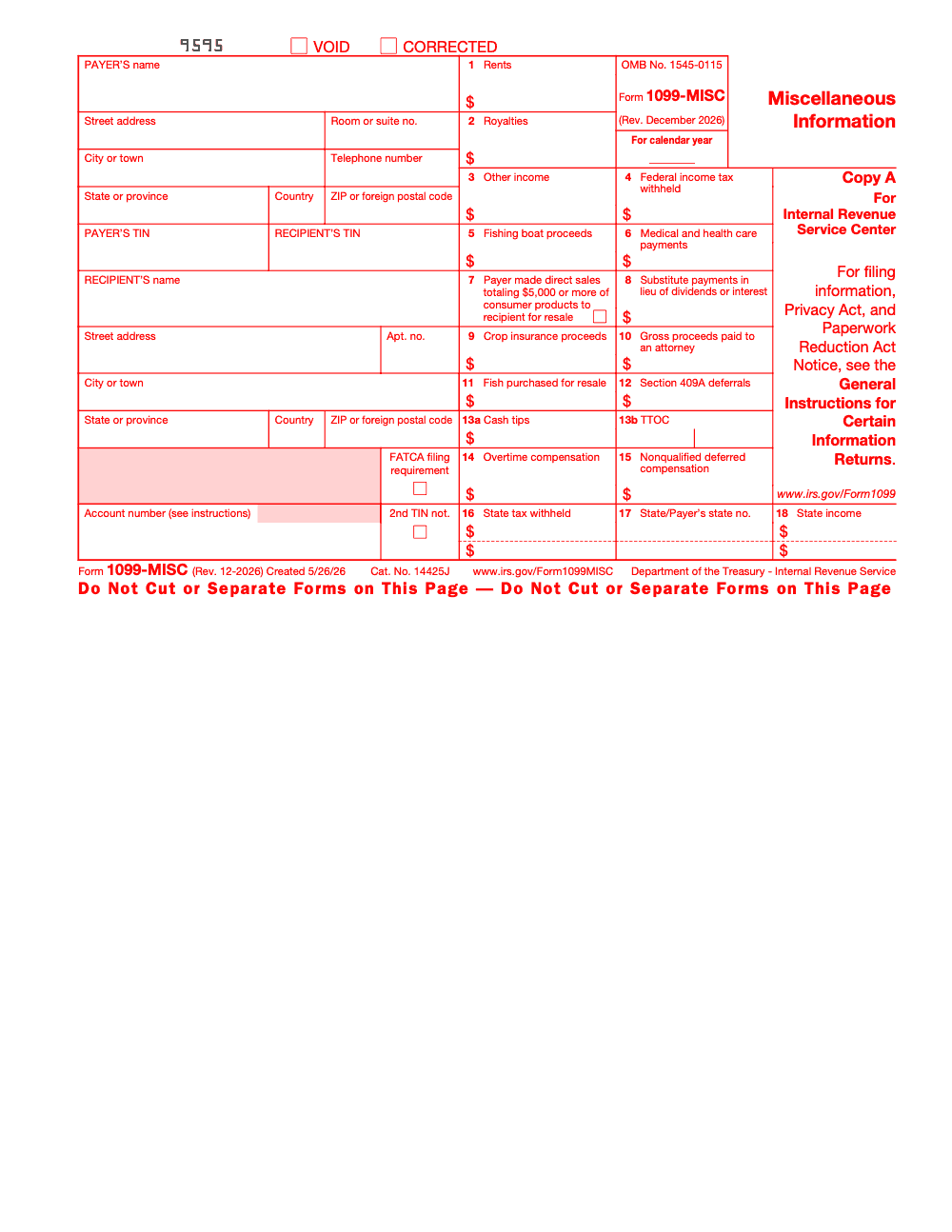
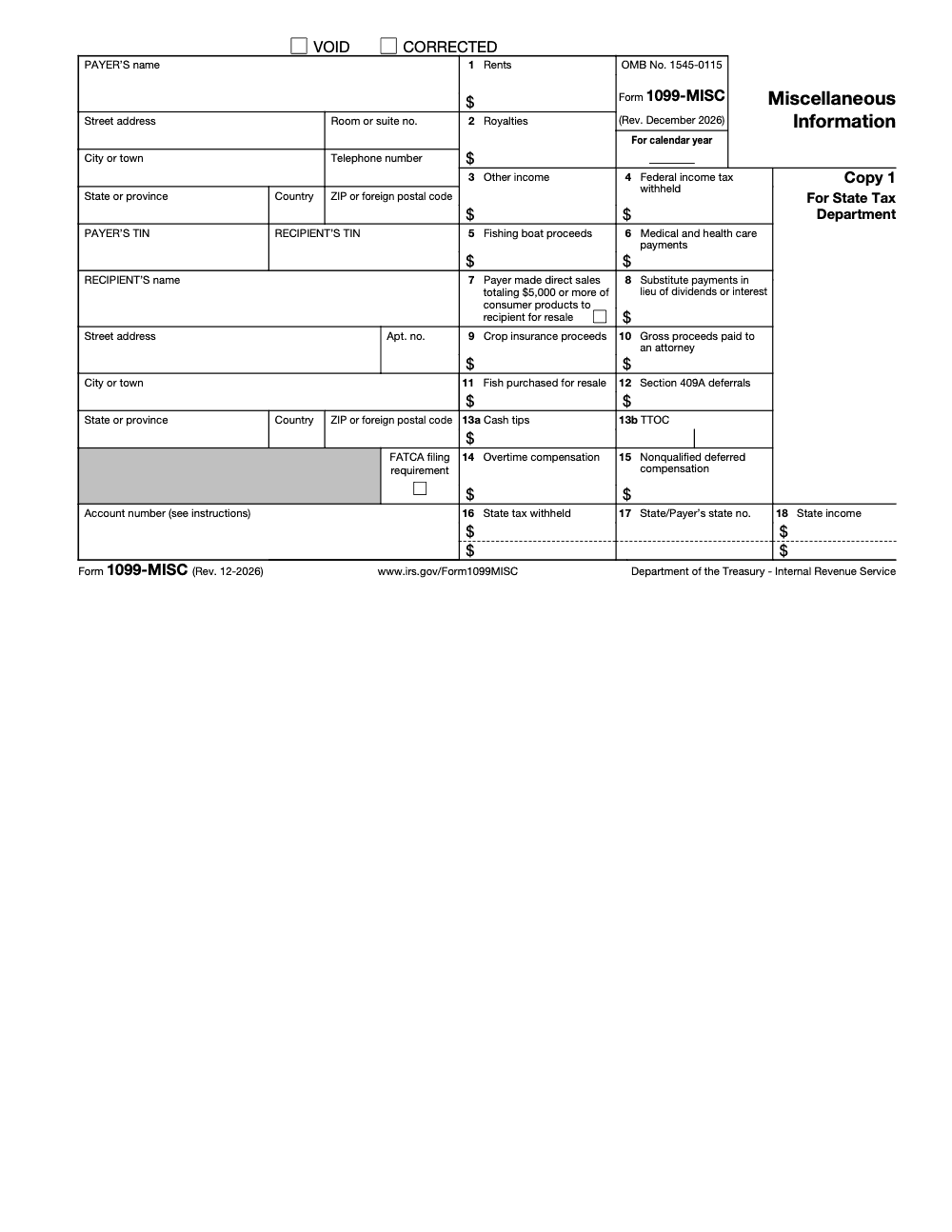
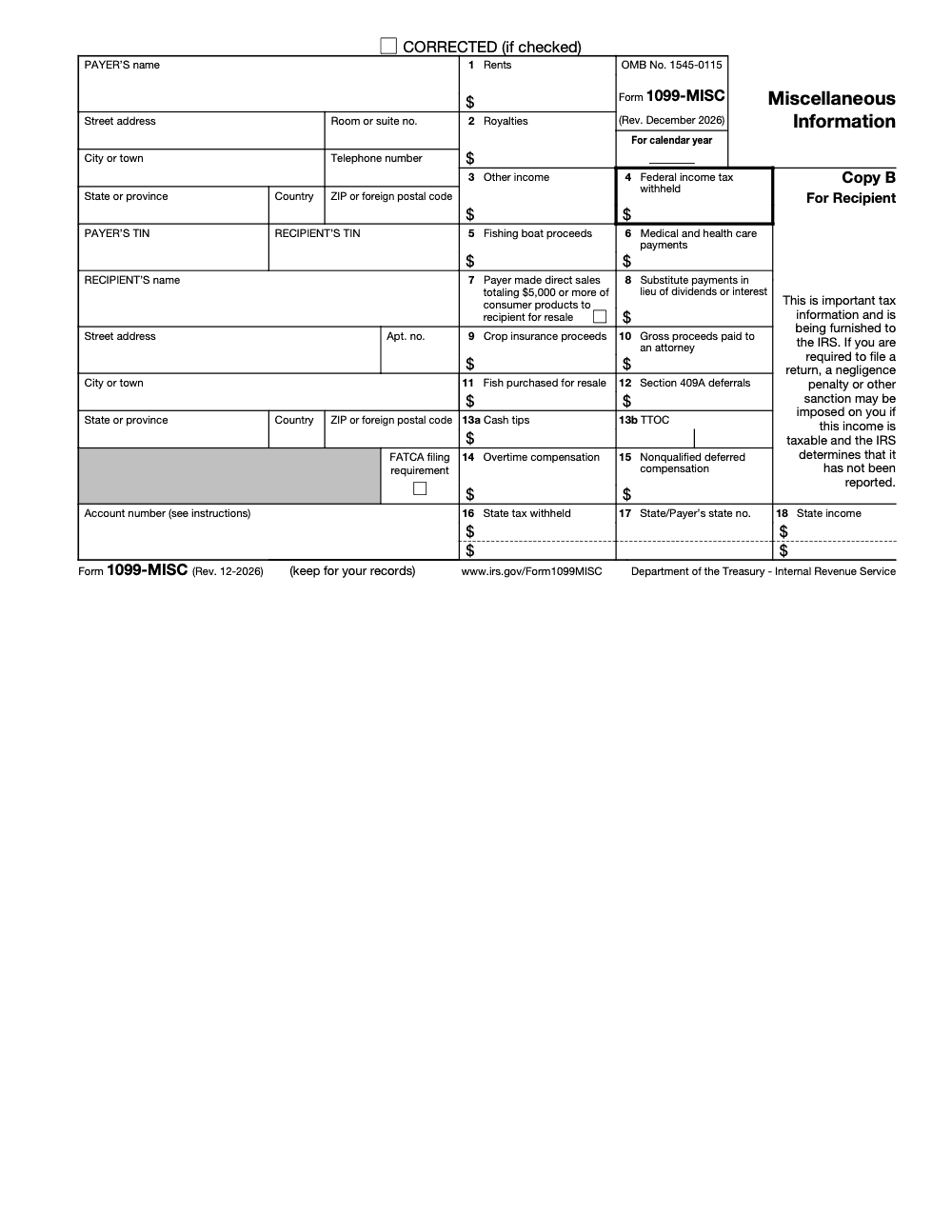
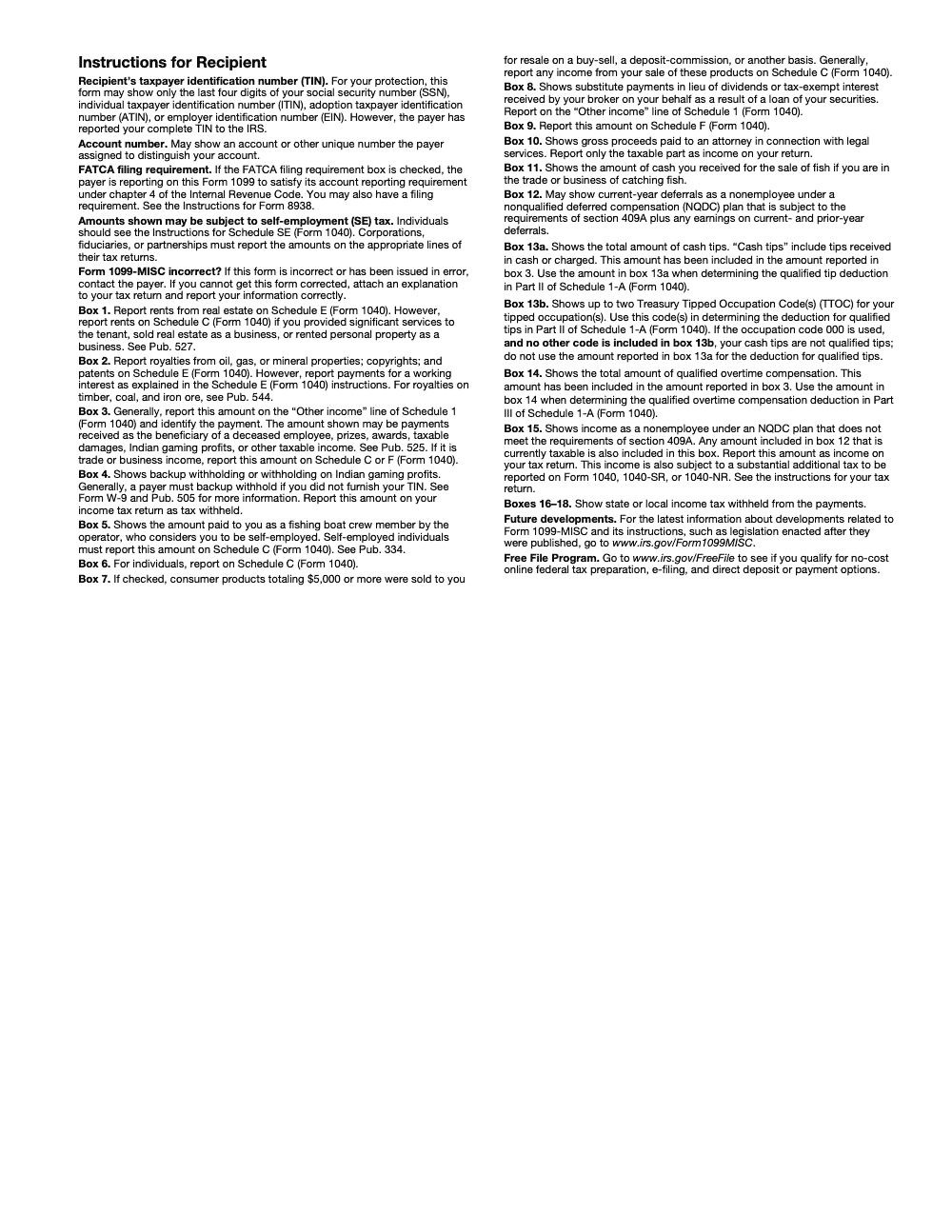
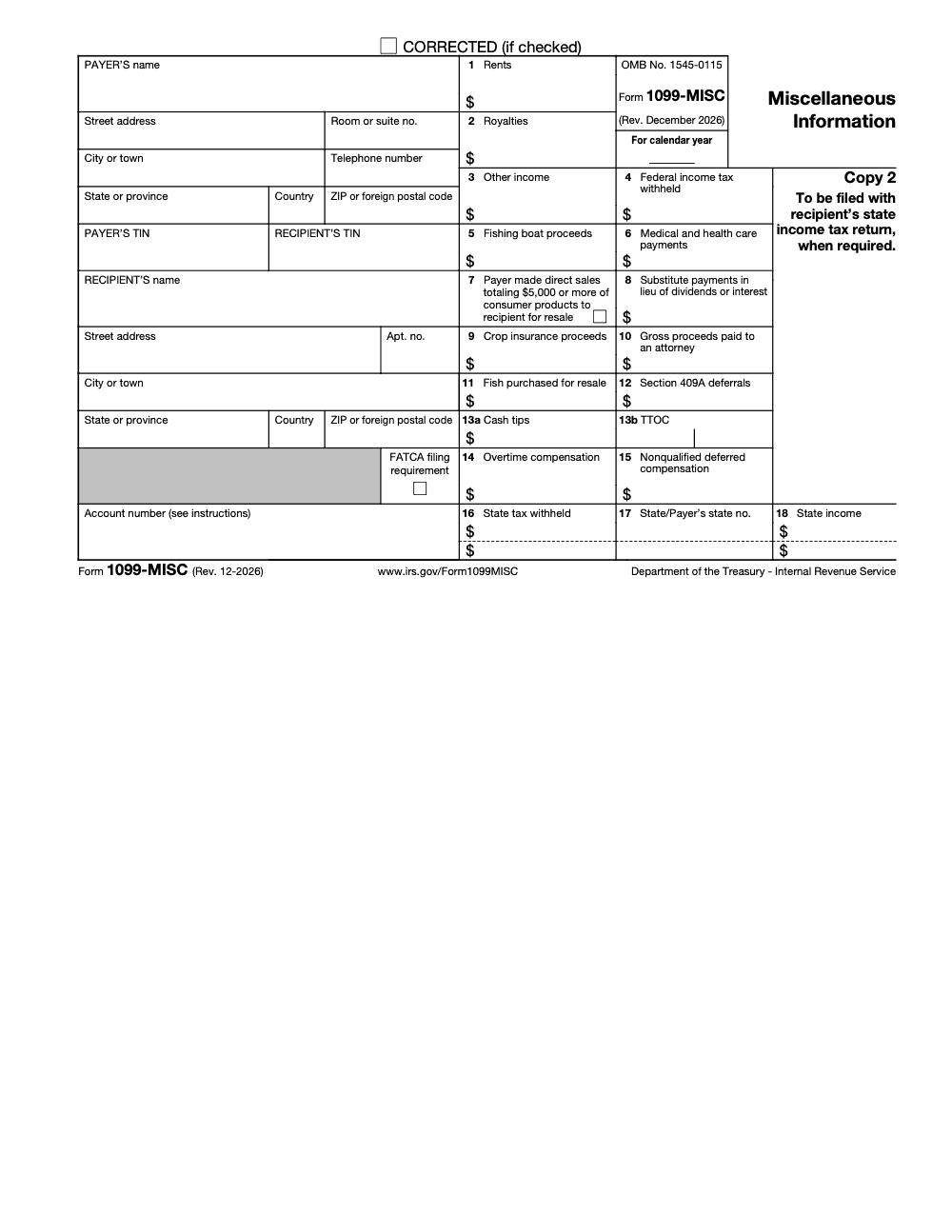
Form 1099-MISC reports miscellaneous information for 2025: rents (Box 1), royalties (Box 2), other income (Box 3), medical payments (Box 6), and gross proceeds paid to an attorney (Box 10), plus the new OBBBA fields for cash tips (Box 13a) and overtime (Box 14), per the IRS Instructions for Form 1099-MISC. Furnish Copy B to recipients by January 31, 2026 (February 15, 2026 when Box 8 or Box 10 has amounts), e-file with the IRS by March 31, 2026, and remember that nonemployee compensation belongs on Form 1099-NEC.
Half of the 1099-MISC problems I see start with one wrong assumption: that contractor payments go here, when nonemployee compensation belongs on 1099-NEC. 1099-MISC is reserved for rents in Box 1, royalties in Box 2, other income in Box 3, medical payments in Box 6, and gross proceeds paid to an attorney in Box 10, with new OBBBA fields for cash tips in Box 13a and overtime in Box 14.
The thresholds split too, generally $10 for royalties and $600 for most other categories, and backup withholding at 24% gets reported even when the underlying payment falls below those floors. For 2025 payments, furnish recipient Copy B by January 31, 2026, though Box 8 or Box 10 amounts push that to February 15, 2026, with IRS e-filing due March 31, 2026.
Key Takeaways
- Use 1099‑MISC for rents, royalties, prizes and awards, medical and health care payments, fishing boat proceeds, and certain attorney payments. Do not report nonemployee compensation here, that belongs on 1099‑NEC.
- Typical thresholds are 10 for royalties and certain substitute payments and 600 for most other reportable categories. Always report any backup withholding you took.
- Furnish recipient Copy B by January 31, 2026, except when you report amounts in box 8 or box 10, those recipient statements are due February 15, 2026.
- File with the IRS by February 28, 2026 if paper, or March 31, 2026 if e‑file, and e‑file is mandatory when you file 10 or more information returns in total.
- Backup withholding is 24%. Report it on the 1099 and on Form 945.
What Form 1099‑MISC covers
Here is the practical way to think about it. If a payment is not wages and not contractor pay, and it falls into any bucket below, you are probably in 1099‑MISC territory:
- Rents and other income at 600 or more.
- Royalties and broker substitute payments at 10 or more.
- Medical and health care payments at 600 or more.
- Fishing boat proceeds, crop insurance proceeds, gross proceeds paid to attorneys, and fish purchased for resale when their specific rules are met.
If you sell consumer products for resale of $5,000 or more, you only check a box, you do not enter a dollar amount. That checkbox can live on either 1099‑MISC box 7 or 1099‑NEC box 2, but use only one form for that indicator. If you choose the 1099‑NEC route, remember it carries an earlier IRS filing deadline of January 31.
Who must file and by when
- You file a 1099‑MISC for each recipient you paid at or above the applicable threshold in your trade or business.
- You always report backup withholding if it applied, regardless of the payment amount.
- You furnish the recipient statement by January 31, 2026, except when you reported amounts in box 8 or box 10, then the recipient statement is due February 15, 2026.
For IRS filing, send paper returns by February 28, 2026, or e‑file by March 31, 2026. If you are filing 10 or more information returns in aggregate, you must e‑file. The free IRS IRIS portal works well for many firms and does not require commercial software.
Payment types and thresholds at a glance
| Payment type | Threshold | 1099‑MISC box |
| Rents | 600+ | Box 1 |
| Royalties | 10+ | Box 2 |
| Other income, prizes, awards | 600+ | Box 3 |
| Fishing boat proceeds | See rules | Box 5 |
| Medical and health care payments | 600+ | Box 6 |
| Direct sales for resale indicator | 5,000+ | Box 7, checkbox only |
| Substitute payments in lieu of dividends or interest | 10+ | Box 8 |
| Crop insurance proceeds | 600+ | Box 9 |
| Gross proceeds paid to an attorney | 600+ | Box 10 |
| Fish purchased for resale | Cash purchases, see rules | Box 11 |
Source rules and box references, IRS 1099‑MISC instructions updated April 2025.
Quick compliance note
- The backup withholding rate remains 24% under section 3406. You report the withheld tax on Form 945 and on the information return for the payee.
- If a statutory due date lands on a weekend or federal holiday, it moves to the next business day.
Deadlines and delivery rules for the 2026 season
Here is the clean timeline for payments you made in 2025:
- Recipient statements due January 31, 2026, except when you report amounts in box 8 or box 10, then due February 15, 2026.
- Paper filing with the IRS due February 28, 2026.
- E‑file due March 31, 2026.
- E‑file is mandatory when you file 10 or more information returns in total, aggregated across all types, for the year (corrected returns do not count toward the 10‑return threshold).
If you need more time to file with the IRS, submit Form 8809 by the original due date for an automatic 30‑day extension, except that no automatic extension is available for Forms W‑2 and 1099‑NEC. To extend the time to furnish recipient statements, fax Form 15397 by the original furnish date.
Recommended filing path
- Use the IRS IRIS Taxpayer Portal if you do not already have a transmitter set up, it is free and supports 1099‑MISC and 1099‑NEC.
- If you paper file, include Form 1096 as the transmittal for Copy A.
- Keep proof of furnishing to recipients, whether mailed or electronic, and keep e‑file acknowledgments with your workpapers.
Box‑by‑box highlights you will actually use
Royalties, box 2, threshold 10
Report royalties of 10 or more in box 2. Payments that are broker substitutes for dividends or tax‑exempt interest are not royalties, those belong in box 8 at a 10 threshold. One exception worth flagging, timber royalties paid under a pay‑as‑cut contract do not go on 1099‑MISC at all, they belong on Form 1099‑S.
Medical and health care payments, box 6
Report 600 or more paid to each provider for medical or health care services. Corporate status does not exempt these payments from reporting. Keep your remit-to details clean, since clinic groups and facilities often have different legal payees than the practitioner you see on invoices.
Fishing boat proceeds, box 5, and fish purchased for resale, box 11
Fishing boat proceeds go in box 5 under the specific rules in the instructions. If you purchase fish for resale with cash, that is reported in box 11. Both areas generate frequent questions, so tie out to merchant category codes and expense accounts in your trial balance to avoid misses.
Gross proceeds paid to attorneys, box 10
This is not attorneys’ fees for services, those fees of 600 or more are reported on 1099‑NEC. Box 10 on 1099‑MISC is for gross proceeds paid to an attorney, such as settlement funds, when the payment is connected with legal services but not for the attorney’s services to you. The threshold is 600. The corporate exception does not apply here.
Direct sales indicator, box 7 on 1099‑MISC or box 2 on 1099‑NEC
You can place the $5,000+ direct sales checkbox on either form, but only one of them. If you pick 1099‑NEC for the checkbox, remember it pulls you into the January 31 IRS filing deadline for NEC. Many teams keep this indicator on 1099‑MISC to keep their core NEC e‑file run clean.
Backup withholding, box 4, and Form 945
If you were required to withhold because the payee failed to provide a correct TIN or you received a CP2100/2100A notice, withhold at 24% and report the tax in box 4 of the 1099 and on Form 945. You must furnish and file the 1099 even if the gross payment was below the normal threshold, because tax was withheld.
Filing deadlines table
| Step | What triggers it | Due date for 2026 season |
| Furnish recipient Copy B | Any required 1099‑MISC | Jan 31, 2026 |
| Furnish recipient if reporting box 8 or box 10 amounts | Substitute dividend or interest payments, or gross proceeds to attorneys | Feb 15, 2026 |
| File paper Copy A with IRS | General 1099‑MISC filing | Feb 28, 2026 |
| E‑file Copy A with IRS | General 1099‑MISC filing | Mar 31, 2026 |
| E‑file requirement | Aggregated 10+ information returns | Applies for 2026 season |
Authoritative source, IRS 2025 General Instructions and IRIS e‑file guidance.
Penalties you want to avoid, plus a simple prevention plan
The IRS penalty regime is per form, and it stacks quickly. For the 2026 season, the base penalty tiers are:
- 60 per return if you correctly file within 30 days after the due date, annual cap applies.
- 130 per return if you file after 30 days but by August 1, higher annual cap.
- 340 per return if you file after August 1 or not at all, highest annual cap.
- Intentional disregard starts at 680 per return with no maximum. A separate penalty applies for failing to furnish correct payee statements.
A simple plan that works in real firms:
- Collect W‑9s up front, run TIN Matching for higher‑risk payees, and track CP2100 follow‑ups.
- Calendar the furnish date and the IRS filing date, request Form 8809 only when needed, and use Form 15397 for recipient statement extensions.
- Reconcile 1099 totals to your GL and vendor subledger before you e‑file, then keep acknowledgments in the workpapers.
If you backup withhold, you are responsible for reporting and depositing that tax. Report it on Form 945 and on the payee’s 1099, even if the payment amount itself would otherwise be under the usual threshold.
Electronic furnishing and accessibility
If you furnish statements electronically, you need affirmative consent from the recipient that shows they can access the statement in the format you will use. Your notice must explain how to withdraw consent, how to get a paper copy, hardware and software requirements, and how long the statement will remain available. If you post statements on a portal, they must be accessible through October 15 of that year and you must notify recipients where to find them.
For e‑file, many firms now use the IRS IRIS portal. It is free, supports common 1099 forms including 1099‑MISC and 1099‑NEC, and eliminates the need to buy a separate transmitter package for basic needs.
A short note for busy firm leaders
If your bottleneck is not knowledge, it is capacity and workflow, you are not alone. Most firms miss 1099 deadlines because their teams are tied up in reviews, chasing documentation, or fixing naming and workpaper issues. If you need disciplined capacity during 1099 season without giving up control, Accountably integrates trained offshore teams into your system, with SOPs, standardized workpapers, and defined SLAs so your partners stay out of review loops and your clients get their statements on time. Use this only if it helps you solve the real problem, reliable delivery at scale.
Wrap up
You do not need drama this January. Lock down W‑9s now, map your 1099‑MISC boxes, decide where to place the direct sales indicator, and pick your e‑file route. The rules above, plus a tidy checklist and a reliable calendar, will keep your team focused and your clients confident.
Compliance note, this guide reflects the IRS 1099‑MISC instructions updated April 2025, the 2025 General Instructions, and current e‑file rules as of November 4, 2025. Always confirm any late‑year changes before you file.
Common Mistakes We See Every Season
The same handful of errors show up across vendor files every January. Catching them in the prep step keeps the correction queue small and protects the recipient-statement deadline.
Reusable Checklists
These three blocks are written for SOP files. Copy the markup directly into your firm playbook and the page will track items checked off on this device.
Pre-filing vendor and box mapping
- Confirm a signed Form W-9 on file for every payee before the first payment of the year.
- Tag each payment in the AP system to a 1099-MISC box (1, 2, 3, 5, 6, 8, 9, 10, or 11) at entry, not at year end.
- Route nonemployee compensation to a separate 1099-NEC bucket; flag any attorney payee for the gross-proceeds versus fees split.
- Identify Box 7 direct-sales indicators by reviewing buy-sell consumer-product purchases of $5,000 or more to a single payee.
- Reconcile the 1099-MISC subledger to the GL once per quarter, not once at year end.
- Run the 24% backup-withholding scan on any payee whose TIN matching has failed, per IRC §3406.
Box 13a and 13b OBBBA tip-deduction validation
- Confirm Box 13a Cash tips ties to the payroll tip register for the year.
- Verify each payee's Treasury Tipped Occupation Code in Box 13b. TTOC 000 means the tips do not qualify for the deduction.
- Check that the Box 13a amount is already included in Box 3 Other income, not added on top.
- Repeat the included-in-Box-3 check for Box 14 Overtime compensation.
- Flag payees with TTOC 000 in the recipient instructions so the deduction is not claimed by mistake on Schedule 1-A.
- Document the Box 13b code source in the workpaper file for audit defense, per the IRS Instructions for Form 1099-MISC.
1099-MISC correction triage
- Separate payee-level errors (wrong amount, code, or box) from issuer-level errors (wrong issuer name or TIN).
- For payee one-transaction errors (amount, code, payee indicator), file a single corrected return coded G in the same channel as the original.
- For payee two-transaction errors (TIN, name, or wrong return type), file the void plus the replacement coded C.
- For issuer-level errors, mail the letter to Internal Revenue Service, 230 Murall Drive, Mail Stop 4360, Kearneysville, WV 25430. Do not try to fix it through FIRE.
- Confirm the correction window: 3 calendar years generally, 4 calendar years when backup withholding was imposed under IRC §3406.
- Send state-only corrections directly to the state, not through the Combined Federal/State Program. Note that Missouri (CF/SF code 29) left the program for tax year 2025, per IRS Publication 1220.
Keep 1099-MISC Season From Stalling
1099-MISC season is short and front-loaded. Copy B has to reach the recipient by January 31, 2026 for most payees and February 15, 2026 when Box 8 or Box 10 has amounts, while the electronic IRS filing closes on March 31, 2026 (per the IRS Instructions for Form 1099-MISC and IRS Publication 1220). Tax year 2025 also adds new Box 13a cash tips, Box 13b Treasury Tipped Occupation Code, and Box 14 overtime compensation fields to support the OBBBA deductions, which means the prior year's templates and AP mappings no longer cover the form as filed.
The stall point is rarely the knowledge. It is the operational layer: vendor-file cleanup, W-9 chase, box mapping at the transaction level, and a correction queue that grows every time a recipient flags a wrong amount. The fix is to move that work upstream and keep close discipline running through year end.
- Map every AP payment to a 1099-MISC box (1, 2, 3, 5, 6, 8, 9, 10, or 11) at entry. Do not wait for the year-end sort.
- Split attorney payments at the source into Box 10 gross proceeds and 1099-NEC Box 1 fees so neither bucket drifts.
- Carry the Box 13a tip amount and Box 14 overtime as subsets of Box 3, with the Box 13b TTOC code recorded against each payee in the workpaper file.
- Maintain a single information-return tally per filer EIN to track the 10-return aggregate e-file threshold under Treasury Decision 9972 and migrate the full batch to FIRE or IRIS once you cross it.
- Move FIRE workflows toward IRIS now. FIRE is targeted for retirement after the 2026 filing season and IRIS becomes the sole intake path for newer information returns.
This is the operational layer that holds the 1099-MISC deadline together. Accountably builds it inside the existing AP and payroll workflow with documented SOPs, multi-layer review, and turnaround SLAs covering the January-to-March window. See how our tax delivery service handles the 1099-MISC, 1099-NEC, and information-return cluster as one operation rather than three separate pile-ups.
FAQs
You use it to report business payments like rents, royalties, prizes and awards, medical and health care payments, fishing boat proceeds, certain substitute dividend or interest payments, fish purchased for resale, crop insurance proceeds, and gross proceeds paid to attorneys. Do not report nonemployee compensation on 1099‑MISC, that belongs on 1099‑NEC.
Yes. Recipients use the statement to report income on their return, subject to the usual rules for each income type. If federal income tax was withheld, it will appear on the form and should be claimed on the return. Encourage recipients to consult their advisor for the proper line items.
1099‑NEC reports nonemployee compensation of 600 or more for services. 1099‑MISC covers other categories such as rents, royalties, medical payments, and gross proceeds to attorneys. The direct sales checkbox can appear on either form, but only use one, and if you use the NEC version the IRS filing deadline is January 31.
Use the IRS e‑file systems where possible. If you must paper file, order scannable red‑ink forms and include Form 1096. For e‑file, IRIS provides a free portal and specifications for bulk filing.
Other forms this guide names
Summarize this article with AI
About this guide
Accountably helps US CPA, EA, and accounting firms hire trained accountants and tax preparers in India.
About us Reviewed byJugal Thacker, CPAFounder and CEO at Accountably
A Washington-licensed CPA with 7+ years inside US firms – PwC, a real-estate tax practice, then a full-service firm, rising from reviewer to manager to advisory. This article was reviewed against current IRS guidance for the 2025 tax year and updated for filers preparing late returns, amendments, and 2026 estimates.
View profile →How we research, review, and update this guide
Every Accountably guide is researched against primary IRS sources, reviewed by a U.S. CPA, and refreshed as guidance evolves. Read our Editorial Guidelines to see how we source, fact-check, and update our content.