Summarize this article with AI
In Brief
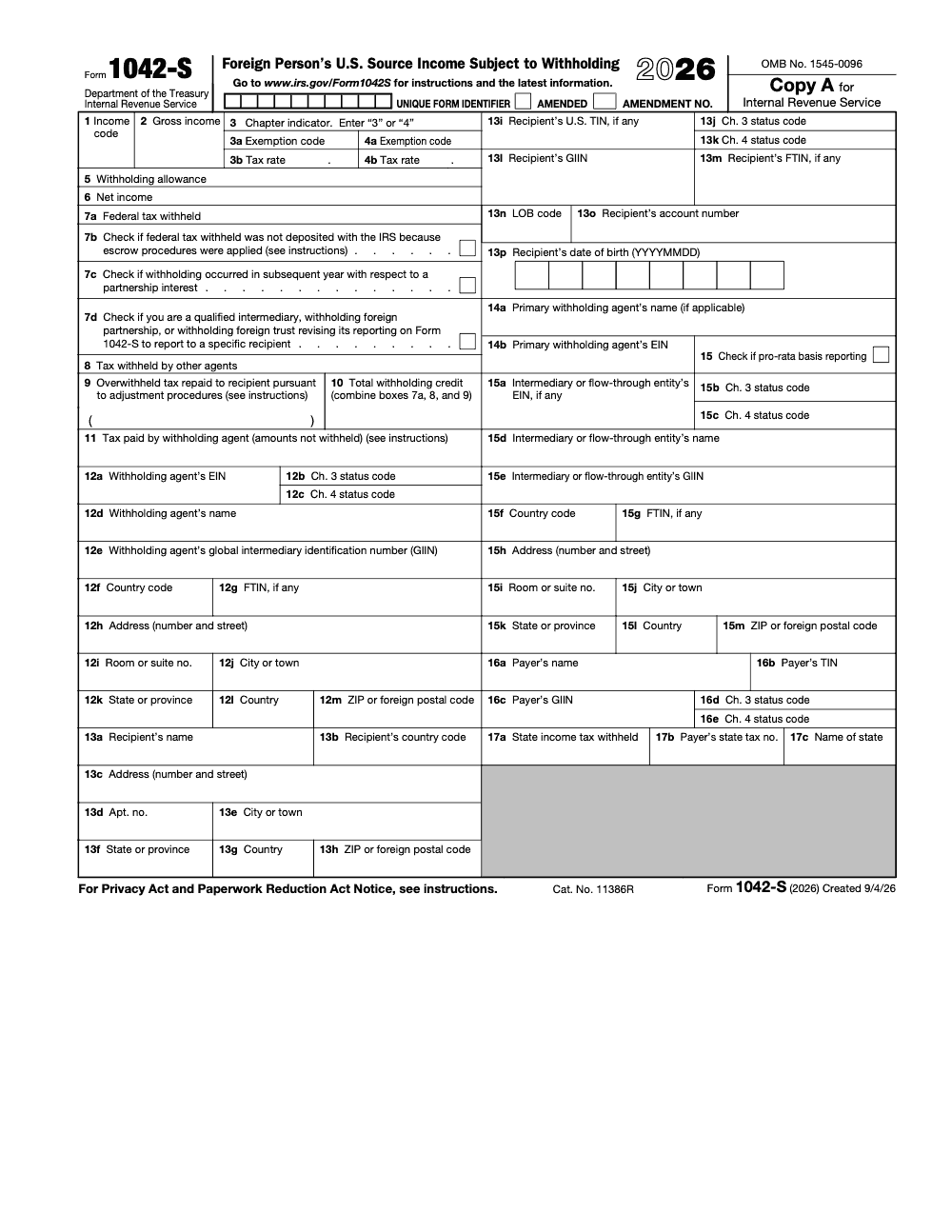
Form 1042-S reports U.S.-source income paid to foreign persons (FDAP under chapter 3 and certain withholdable payments under chapter 4) – withholding agents file one per recipient, per income code, per tax rate, regardless of whether any tax was actually withheld (per IRS Form 1042-S instructions, 2026 revision). The default chapter 3 NRA rate is 30% under IRC §1441, every form must show either 3 or 4 in box 3, and every 1042-S must be reconciled on the parent Form 1042.
Here is the rule people argue with most: you file a Form 1042-S even when no tax was withheld, one per recipient, per income code, per tax rate, regardless of the dollars actually held back. The form exists to report the payment, not just the withholding, and the default chapter 3 NRA rate sitting behind it under IRC section 1441 is 30%.
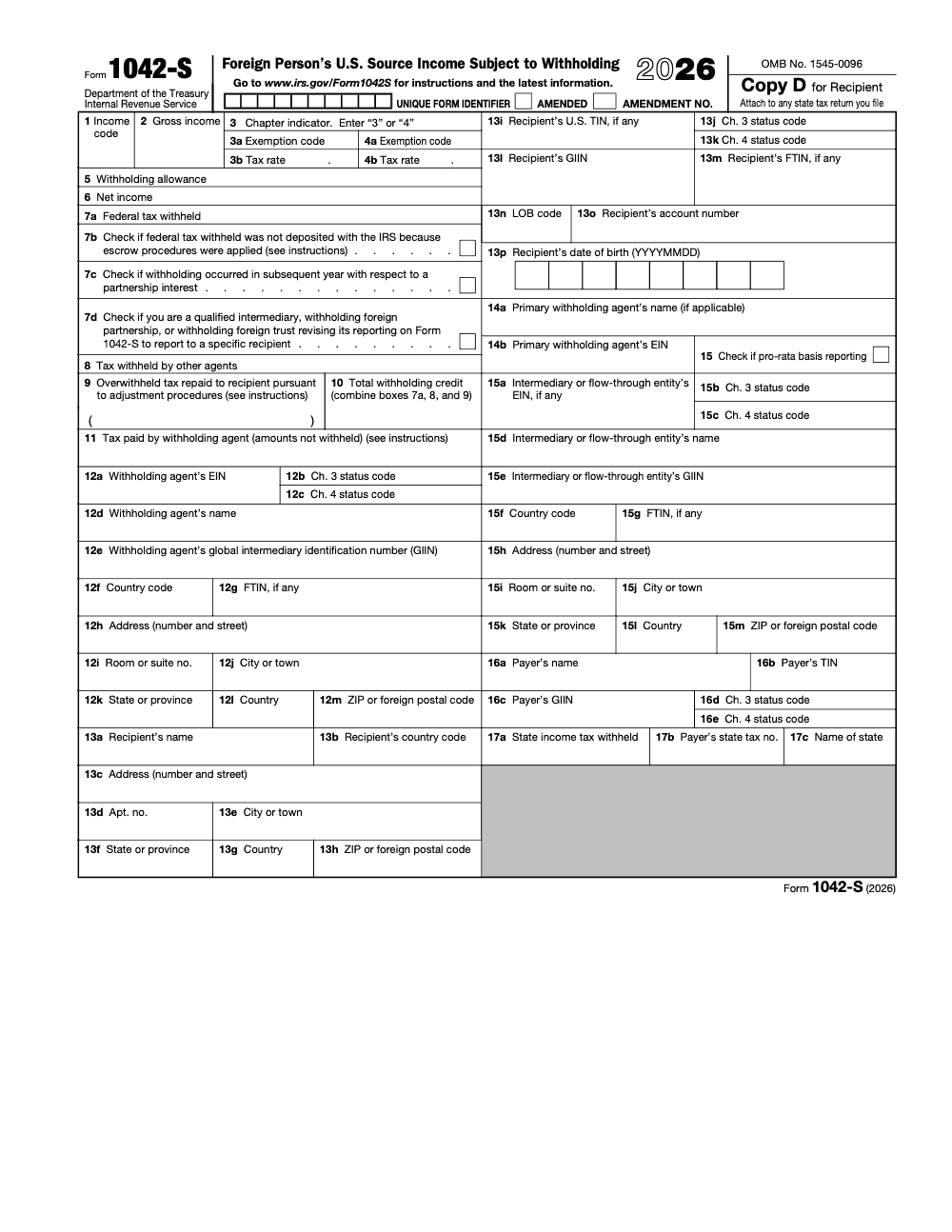
Every form has to carry a chapter indicator in box 3, with either a 3 or a 4, plus the income code in box 1, gross income in box 2, the rate in box 3b or 4b, and federal tax withheld in box 7a. For 2025 payments the filing date is March 16, 2026, and each 1042-S has to reconcile back to the parent Form 1042.
Key Takeaways
- Form 1042‑S is the per‑recipient information return for U.S.‑source income paid to foreign persons. You file one form per recipient, per income code, per tax rate, even when no tax was withheld.
- Every 1042‑S carries a chapter indicator in box 3 (enter "3" or "4"), the income code in box 1, gross income in box 2, the applicable rate in box 3b or 4b, and federal tax withheld in box 7a.
- For 2025 calendar‑year payments, the 1042‑S filing date lands on Monday, March 16, 2026, since March 15 falls on a Sunday. Form 8809 extends only the information returns.
- Paper 1042‑S filings need a Form 1042‑T transmittal, with a separate 1042‑T for each form type. MeF e‑filing removes the 1042‑T step. Every 1042‑S must reconcile to the parent Form 1042.
What Form 1042‑S Covers, And Who Must File
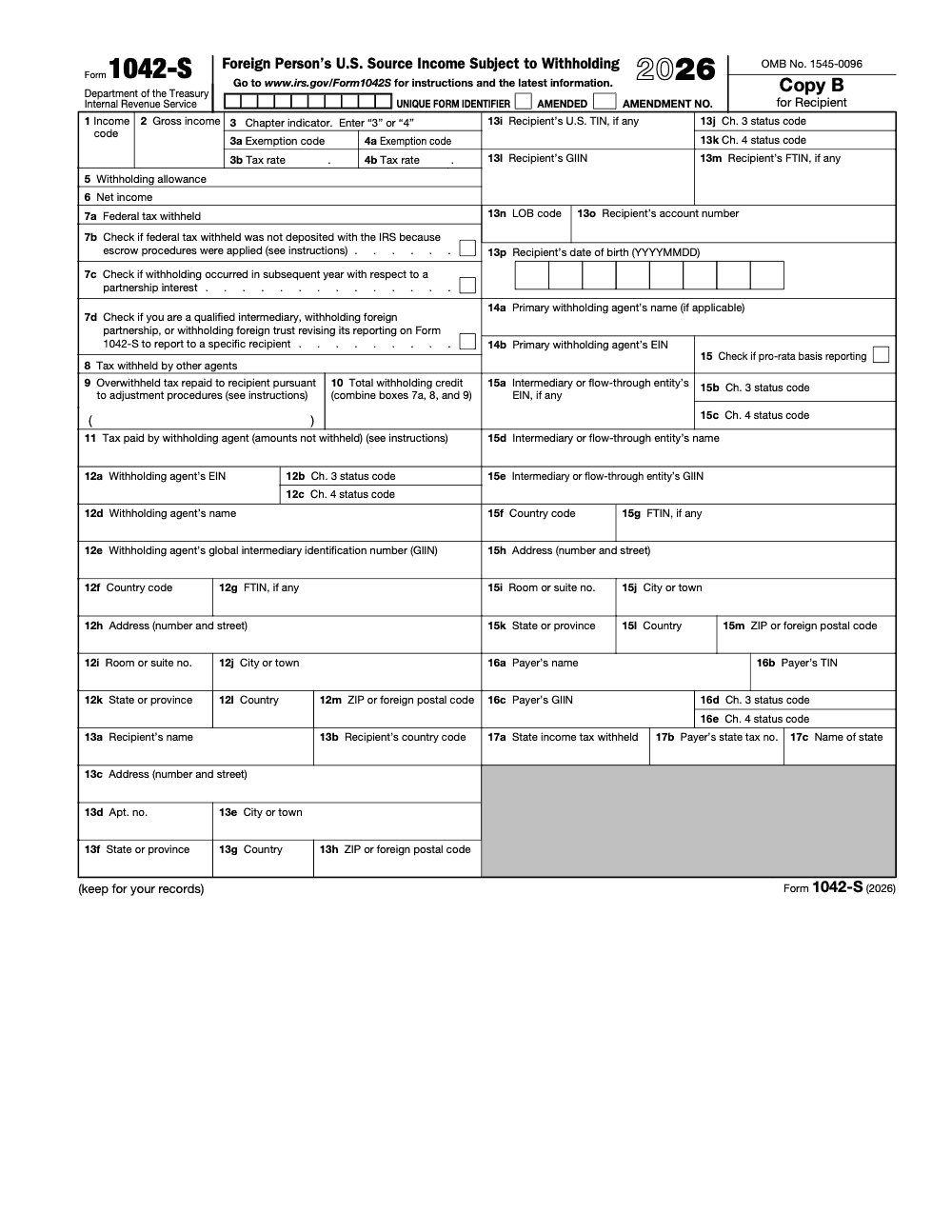
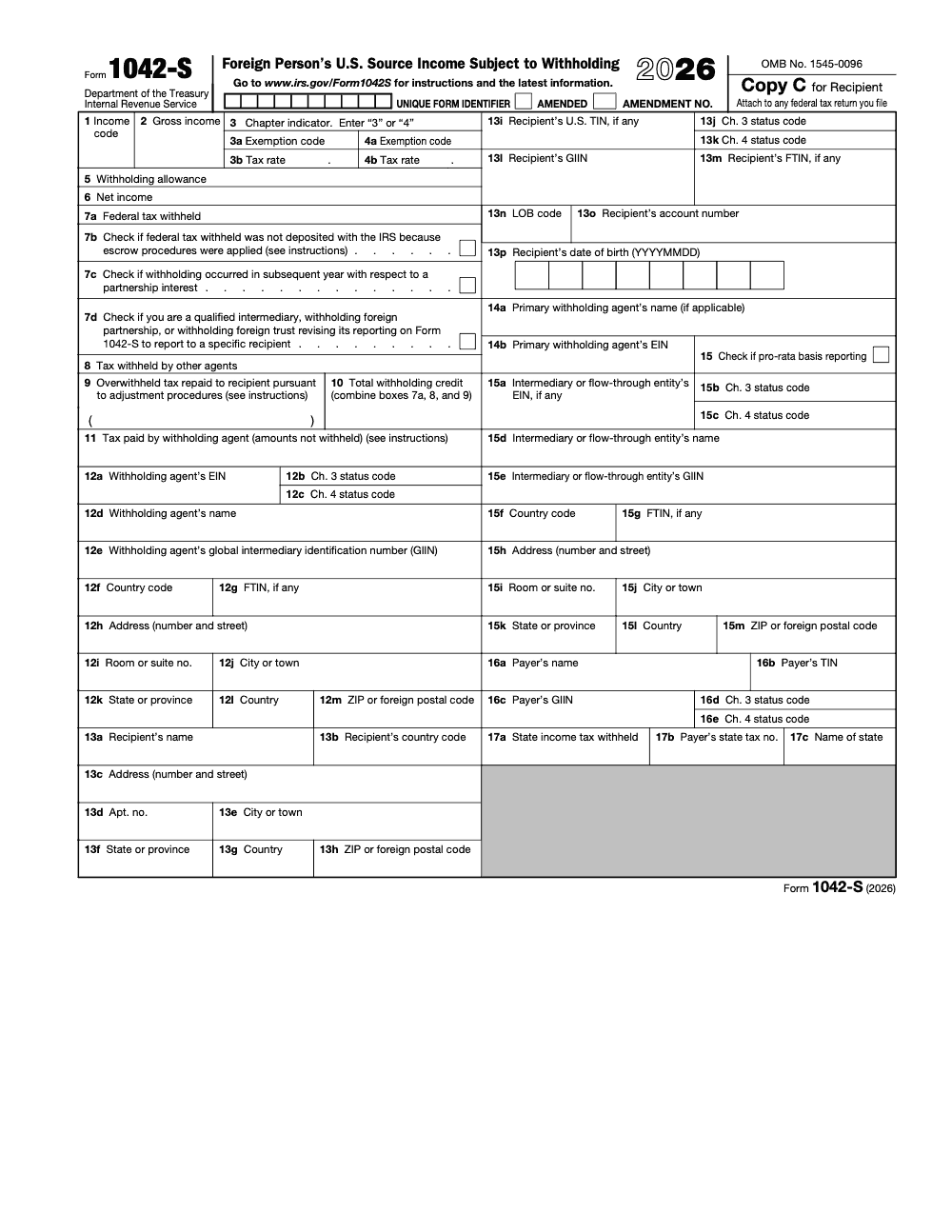
- Form 1042‑S is the per‑recipient information return you, the withholding agent, file with the IRS and furnish to each foreign payee to report a specific U.S.‑source payment for the calendar year. Think dividends, interest, royalties, nonresident compensation, and scholarships. You issue a separate 1042‑S for each recipient, each income code, and each tax rate, then reconcile them all on the parent Form 1042.
- If you receive, control, have custody of, dispose of, or pay a withholdable amount to a foreign person, you are a withholding agent and you are in scope to issue Forms 1042‑S, even when the rate is zero (treaty‑exempt amounts, portfolio interest, and effectively connected income still require a 1042‑S with the appropriate exemption code in box 3a or 4a).
- Each form requires the income code in box 1, gross income in box 2, the chapter indicator in box 3, your withholding agent EIN in box 12a, and the recipient's name, country code, and TIN in the box 13 series. Accuracy here protects you against mismatch notices and slow reviews later.
The Core Inputs You Need Before You Start
Gather these items per recipient first, then open the form:
- Withholding agent details, EIN for box 12a, legal name, and your chapter 3 and chapter 4 status codes.
- The income code (box 1), gross income (box 2), and the chapter indicator (box 3, enter "3" or "4") for each payment to each foreign recipient.
- The applicable rate and any exemption code, box 3a and 3b for chapter 3, box 4a and 4b for chapter 4. Box 4a applies only when box 4b shows 00.00.
- Recipient identification for the box 13 series, name (13a), country code (13b), U.S. TIN if any (13i), and FTIN if any (13m), plus treaty benefits documentation in the W‑8 series.
- Federal tax withheld (box 7a), tax withheld by other agents (box 8), and the total withholding credit (box 10), so each recipient form ties to your deposit history.
Chapter 3 vs Chapter 4, A Quick Map
- Chapter 3, statutory withholding on FDAP income paid to nonresident aliens and foreign entities.
- Chapter 4, FATCA withholding and related reporting. On each 1042‑S you designate which chapter applies by entering "3" or "4" in box 3, then complete the matching rate and exemption boxes (3a and 3b for chapter 3, or 4a and 4b for chapter 4).
Box 7 Timing, Where Reviews Often Stall
The IRS wants withholding reported in the year the payment was made, with box 7a showing the federal tax actually withheld. Special timing situations have dedicated check boxes: box 7b flags federal tax that was not deposited because escrow procedures were applied, and box 7c flags withholding that occurred in a subsequent year with respect to a partnership interest. Get the right box checked and the recipient form will hold up under review.
Data Hygiene That Speeds Review
You will save hours by standardizing workpapers. Use clear file naming, one source of truth for each payee type, and a simple tie‑out page that shows:
- Count of 1042‑S records by income code (box 1), rate (box 3b or 4b), and chapter indicator (box 3).
- Gross income (box 2) totals by income code that reconcile to your payment ledger.
- A one‑line bridge from the sum of box 7a across all 1042‑S records to the tax withheld reported on the parent Form 1042.
A Short Checklist Before You Touch The Form
- Validate the correct EIN, or QI‑EIN, WP‑EIN, or WT‑EIN if you file in those capacities.
- Confirm your Chapter 3 and Chapter 4 status codes match the 1042‑S instructions for code sets.
- Run a discrepancy report between your ledger and 1042‑S production files and fix gaps before filing.
A Note For QDDs And 871(m) Watchers
If you are a QDD, attach Schedule Q to Form 1042 for each QDD branch. Also, the 871(m) transition relief has been extended, which continues to affect certain timing and scope decisions for derivatives that reference U.S. stock. Check the current year instructions and the most recent notice before you finalize.
Deadlines, Extensions, And Payments
Mark your calendar. Forms 1042‑S for 2025 calendar‑year payments are due Monday, March 16, 2026, because March 15 falls on a Sunday. File and furnish the recipient copies on time, and if you need more time to file the information returns with the IRS, submit Form 8809 by that date. The parent Form 1042 reconciliation is due on the same mid‑March window, and you extend it on Form 7004. An extension moves the filing deadline only, payment is still due by the original due date.
Extensions buy you time to file, not time to pay. Pay by the original due date to stop penalties and interest.
Quick Planner, Forms And Dates
| Action | Form or Method | When it is due | What it does |
| File recipient forms | 1042‑S, and 1042‑T if paper | March 16, 2026 | Reports income and withholding to each foreign payee |
| File the parent annual return | Form 1042 | March 16, 2026 | Reconciles all 1042‑S totals and reports annual liability to the IRS |
| Extend Form 1042 filing | Form 7004 | By March 16, 2026 | Extends filing only, payment still due |
| Pay expected tax | EFTPS or wire | By March 16, 2026 | Stops late‑payment penalties and interest |
| Extend 1042‑S filing | Form 8809 | By the 1042‑S due date | Extends only the 1042‑S information returns |
Penalties And Interest, What To Expect
- Late filing, 5 percent of unpaid tax per month or part of a month, up to 25 percent.
- Late payment, 0.5 percent per month or part of a month, up to 25 percent, plus interest from the original due date.
- Information return penalties can apply separately for 1042‑S or 1042‑T errors or lateness. The cleanest path is simple, file 1042 on time, pay on time, and furnish correct 1042‑S forms on time.
Form 1042‑S And 1042‑T, How They Fit With Form 1042
Every foreign recipient that received a reportable U.S.‑source payment gets a Form 1042‑S, even when no tax was withheld (treaty‑exempt amounts, portfolio interest, and effectively connected income still require a 1042‑S with the appropriate exemption code in box 3a or 4a). You must also furnish the recipient copy. If you file 1042‑S on paper, include Form 1042‑T as the transmittal, and file a separate 1042‑T for each 1042‑S type. If you e‑file via the IRS Modernized e‑File system, you do not file a 1042‑T. Due dates generally align with March 15, which rolls to March 16 in 2026 for the 2025 filing cycle.
Paper Or E‑File For 1042‑S
E‑file is strongly encouraged and, for many filers, required. Financial institutions that report under Chapters 3 or 4 must e‑file Forms 1042‑S. Partnerships with more than 100 partners must e‑file. There is also a 10‑return threshold that looks across return types for the year when determining if you must e‑file information returns.
Common Reconciliation Gaps To Fix Early
- Counts and totals on your 1042‑S files do not match the return.
- Treaty rates were applied on the recipient files, but the documentation trail is thin.
- Quarter‑monthly totals on lines 1 to 60 do not bridge to lines 64b, 64c, and 64d.
- You used escrow procedures or after‑payment withholding, but did not place the liability in the correct period.
1099 vs 1042‑S, A Quick Comparison
| Topic | 1099 Series | 1042‑S |
| Who receives | U.S. persons | Foreign persons |
| Withholding rules | Domestic backup or none | Chapter 3 and FATCA rules |
| Transmittal | 1096 for paper | 1042‑T for paper |
| Due date to IRS | Varies by form | March 15, next business day if weekend or holiday |
| Linked annual return | None for most filers | Form 1042, your annual withholding return |
Residency drives the form. U.S. persons get 1099s. Foreign persons get 1042‑S, and your matching annual return is Form 1042.
E‑Filing Requirements For Forms 1042‑S
Under the Taxpayer First Act regulations in T.D. 9972, most non‑individual withholding agents must e‑file if they file 10 or more returns of any type in the same calendar year. Financial institutions that report under chapter 3 or chapter 4 must e‑file Forms 1042‑S, and partnerships with more than 100 partners must e‑file regardless of count. For the 2025 filing season of 2024 Forms 1042, the IRS granted broad administrative relief from the parent‑return e‑file mandate for both foreign and U.S. withholding agents, so confirm the current year's instructions for any relief before you decide.
What this means for you, plan for e‑file long term. If your systems are ready, e‑file anyway, it reduces processing time and removes the Form 1042‑T step for 1042‑S files.
Tools And Workflow That Keep Reviews Short
You can ship a clean return if you standardize work and split responsibilities clearly.
- Build SOPs that map source reports to 1042‑S and then to Form 1042, including an index that shows where each line comes from.
- Use MeF‑capable software that supports bulk imports, validates Chapter 3 and 4 status codes, and exports the Record of Federal Tax Liability in the correct format.
- Keep a tie‑out schedule that lists count of 1042‑S records by code and rate and reconciles to lines 64b and 64c.
- Run a pre‑file checklist two weeks before the due date, then again 48 hours before submission.
If you keep getting stuck in production or review bottlenecks, consider adding disciplined offshore capacity that works inside your systems and templates. At Accountably, our U.S.‑led teams slot into your workflow with SOP‑driven execution and layered review, which reduces partner review time and keeps Form 1042 and 1042‑S work on schedule. Use this kind of help when your internal bandwidth is buried, not as a last‑minute band‑aid.
A Simple Pre‑File Checklist
- Confirm due date and calendar it, March 16, 2026.
- Reconcile counts and totals between 1042‑S files and Form 1042, including Chapter 3 and 4 splits.
- Validate status codes and EINs against the instructions.
- Review after‑payment withholding and escrow timing entries for correct period placement.
- Submit Form 7004 only if you need more time to file, and pay by the original due date.
- If you must paper file 1042‑S, include the right 1042‑T transmittals. If you e‑file, skip the 1042‑T.
Closing Thoughts
You can make Form 1042‑S season predictable. Start with clean workpapers, lock your recipient data and income codes early, and give reviewers exactly what they need, no more and no less. If capacity is tight, bring in disciplined help that works inside your process, not around it. File by March 16, 2026, pay on time, and keep your documentation tight. Your future self, and your auditors, will thank you.
Common Mistakes We See Every Season
The same five errors drive most of the IRS reconciliation notices we see on 1042-S returns. They show up in mid-sized payers, large QIs, and university payment offices alike, and almost every one traces back to a documentation gap that surfaced too late in the cycle.
Reusable Checklists
The checklists below are written to paste straight into a firm SOP or workpaper template. Each one covers a different pressure point in the 1042-S cycle, from documentation gates in the prior quarter to the final tie-out before the March 15 deadline.
Recipient documentation lock (Q4, before year-end)
- Confirm a current Form W-8BEN, W-8BEN-E, W-8ECI, W-8EXP, W-8IMY, or Form 8233 is on file for every foreign payee.
- Validate the U.S. TIN in box 13i for every recipient claiming treaty benefits (per IRS Publication 515).
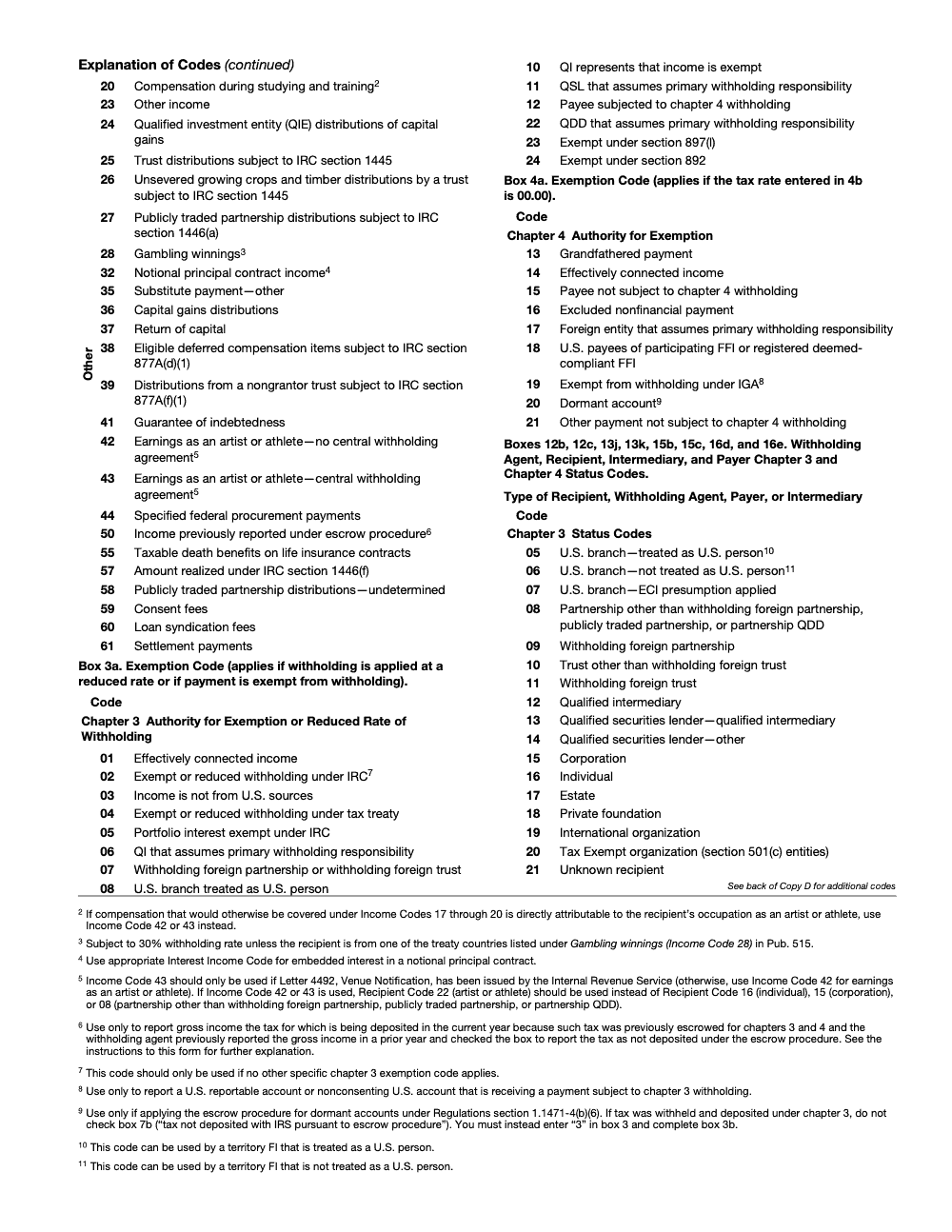
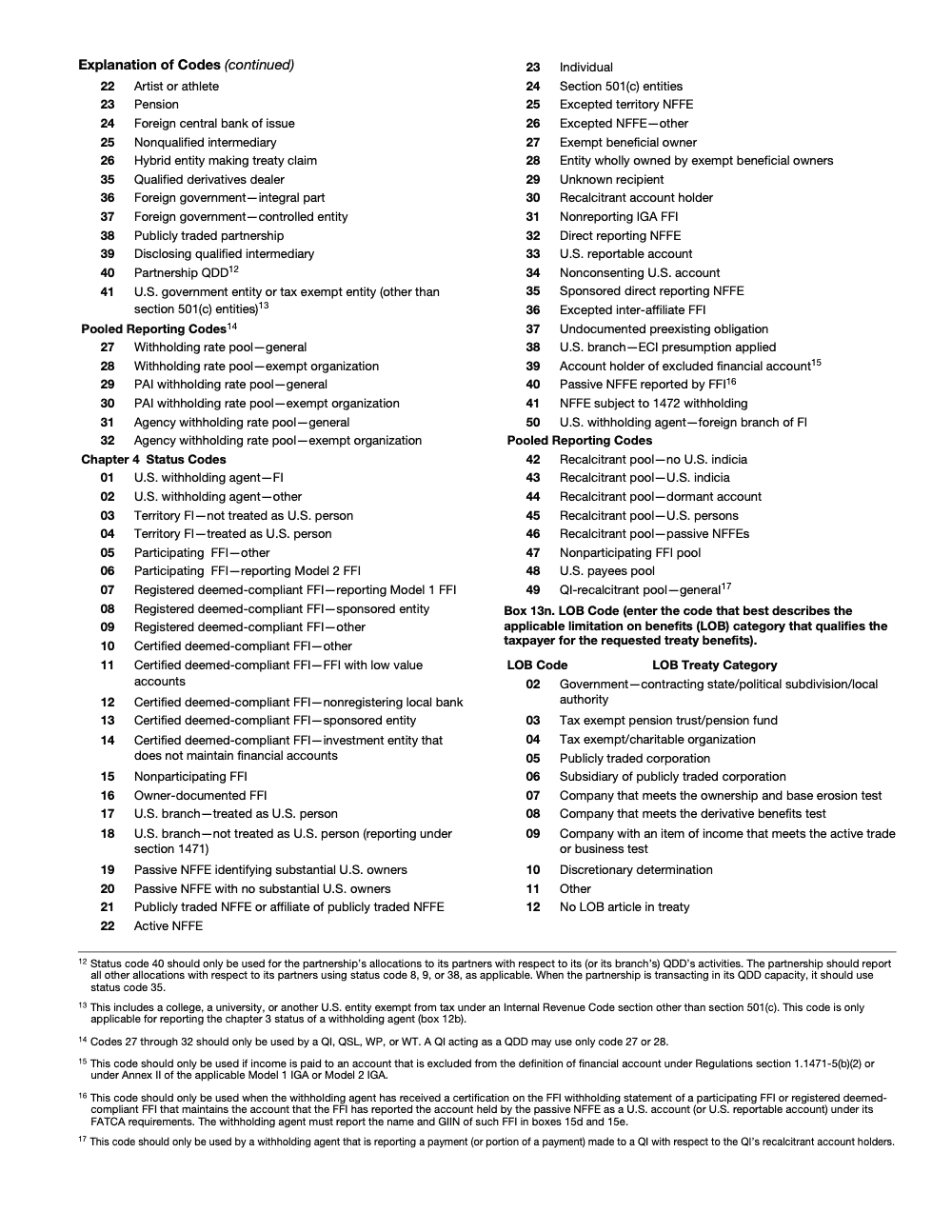
- Confirm the chapter 3 status code in box 13j matches the W-8 series form on file (status 15 corporation, 16 individual, 22 artist or athlete, 25 nonqualified intermediary, 26 hybrid entity making treaty claim).
- Populate the chapter 4 status code in box 13k whenever chapter 4 applies (status 15 nonparticipating FFI, 19 or 20 passive NFFE, 22 active NFFE, 23 individual).
- Refresh the foreign TIN (FTIN) in box 13m and the GIIN in box 13l for every participating FFI, registered deemed-compliant FFI, or sponsoring entity payee.
- Flag Hungary, Russia, and Belarus accounts for the statutory 30% rate and remove any exemption code 04 (treaty) from the master file (note: Belarus is only partially suspended through December 31, 2026 – paragraph 1, subparagraph (g) of Article 3 of the USSR treaty; the rest of the treaty articles remain in place).
- Confirm India-treaty Article 21(2) student standard-deduction claims use the $15,000 figure for 2025 (per IRS Publication 519), not the general OBBBA single-filer amount.
Income code and rate map (early January)
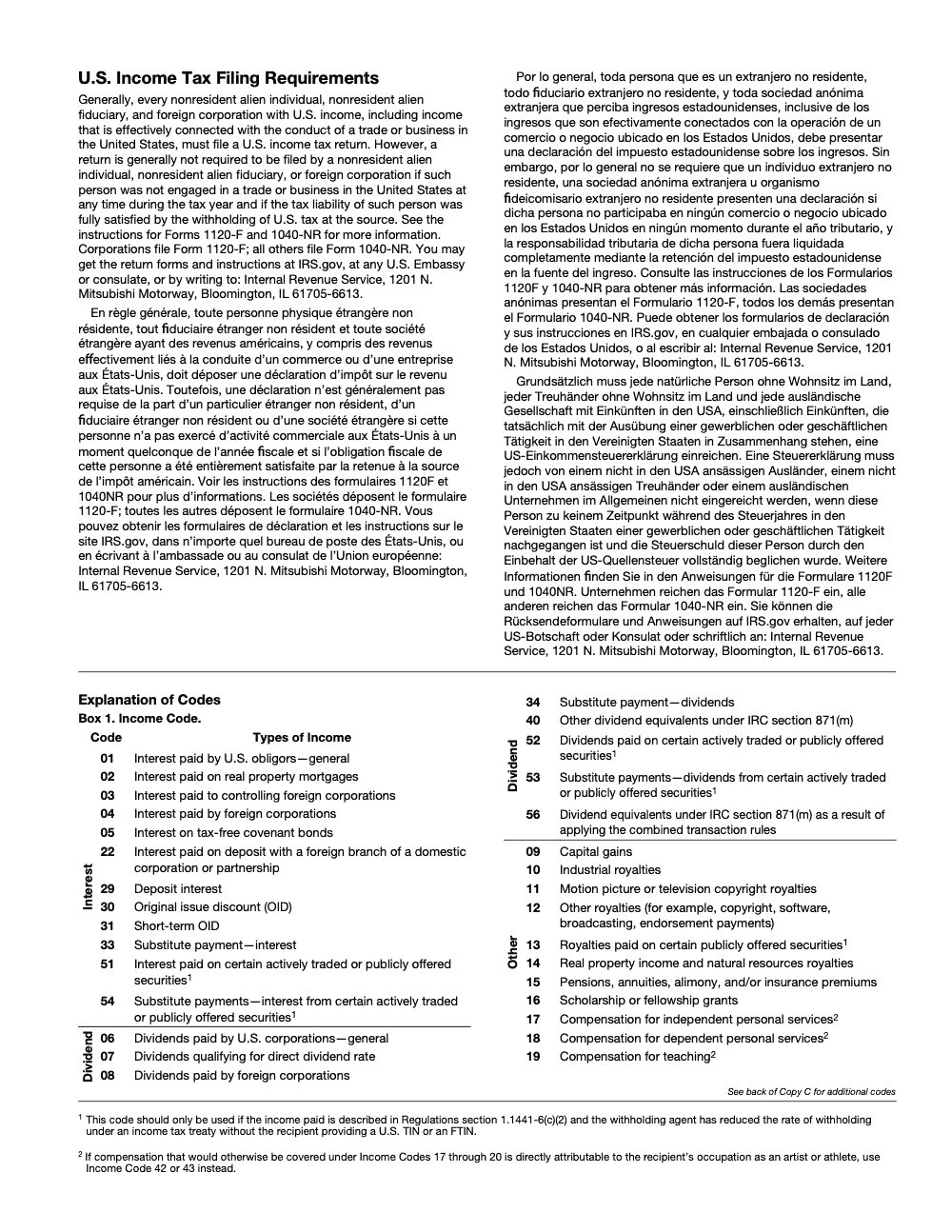
- Match every FDAP payment type to the right income code: 06 U.S. corp dividends, 12 other royalties, 16 scholarship or fellowship, 27 §1446(a) PTP distributions, 40 or 56 §871(m) dividend equivalents, 42 or 43 artist or athlete pay.
- Apply the 14% rate only to F, J, M, or Q visa degree candidates on income code 16 scholarship or fellowship grants; non-degree candidates take the 30% rate, and the services portion runs through Form W-4 graduated withholding.
- Confirm QIE capital-gain distributions use income code 24 with the 21% withholding rate, not income code 09.
- Confirm §1446(f) partnership-interest transfers use income code 57 with the 10% rate on amount realized, not Form 1099 or generic dividend codes.
- Run the chapter indicator check in box 3: every form shows either 3 or 4, never both, and the same payment is reported only once.
- Validate that box 4a is blank wherever box 4b shows a non-zero chapter 4 rate.
- Confirm income code 44 (specified federal procurement payments) carries the 2% excise tax on Form 1042 line 64d.
Form 1042 to 1042-S tie-out (two weeks before March 15)
- Confirm Form 1042 line 61a paper count and line 61b electronic count equal the total 1042-S records generated.
- Tie Form 1042 line 62a total U.S.-source FDAP gross income to the sum of box 2 across all 1042-S records.
- Tie Form 1042 line 63a tax withheld to the sum of box 7a across all 1042-S records.
- Reconcile Form 1042 Section 1 lines 1 through 60 daily tax liability to EFTPS deposit history; differences land on lines 64a through 64e and the balance due on line 69.
- If §871(m) transactions occurred during the year, check the Section 3 box and reconcile dividend-equivalent payments under income codes 40 and 56 separately.
- If filing as a Qualified Derivatives Dealer, check the Section 4 box and attach Schedule(s) Q with the QDD EIN separate from the QI-EIN.
- If paper filing 1042-S, prepare a separate Form 1042-T transmittal for each form type; if e-filing through MeF, skip the 1042-T.
- Confirm electronic filing where the aggregate information-return count for the calendar year reaches 10 (per T.D. 9972), regardless of historical paper practice.
- For Accountably's structured offshore execution across the 1042 and 1042-S filing cycle, see our taxation services.
Keep 1042-S Season From Stalling
Form 1042-S season pulls withholding agents in two directions at once. The reporting cycle covers a full calendar year of FDAP payments to foreign persons, but the parent Form 1042 reconciliation, every recipient 1042-S, and the 1042-T transmittal all converge on the same mid-March filing window. The IRS also dropped the aggregate information-return e-file threshold to 10 starting with returns required to be filed in 2024 (per T.D. 9972), which pulled smaller withholding agents into e-file scope for the first time and tightened the margin for last-minute corrections.
The fix is not faster filing. It is a documentation-first cycle that locks recipient data, income codes, and chapter designations long before March, so the actual return file is mostly an export from clean inputs.
- Lock recipient documentation early: a valid Form W-8BEN, W-8BEN-E, or Form 8233 must be on file before the agent applies chapter 3 exemption code 04 in box 3a, and a U.S. TIN in box 13i is generally required for the treaty claim to stand (per IRS Publication 515).
- Map income codes to recipient activity once per quarter: artist or athlete pay belongs on income code 42 (no central withholding agreement) or 43 (CWA in place via IRS Letter 4492) with chapter 3 status 22 in box 13j, not on codes 17 or 18.
- Treat suspended-treaty positions as a standing check: payments to Hungary recipients on or after January 1, 2024 require the statutory 30% rate with no exemption code 04, and Russia recipients require 30% on payments from August 16, 2024 forward (per IRS Publication 515).
- Reconcile Form 1042 Section 1 daily tax liability to actual EFTPS deposits before drafting the 1042-S file. Lines 61a, 61b, 62a, and 63a on the parent return must match the aggregated 1042-S totals exactly, and box 4a may be entered only when box 4b shows 00.00.
- Run a §1446 check on partnership payments: PTP distributions under §1446(a) use income code 27, while transfer amount realized under §1446(f) uses code 57 with 10% withholding, not a generic dividend code.
When recipient documentation, income codes, and chapter designations are locked weeks ahead, the mid-March window stops being a sprint. Accountably's U.S. tax delivery teams build the documentation cycle, run the income-code map, and prepare the Form 1042 reconciliation so the return file is ready for senior review on day one.
FAQs
You use Form 1042‑S to report a U.S.‑source payment made to a foreign person and the tax withheld on it. You issue a separate form for each recipient, each income code, and each tax rate, furnish a copy to the recipient, and reconcile the totals on the parent Form 1042.
For 2025 calendar‑year payments, the due date is Monday, March 16, 2026, because March 15 falls on a Sunday. If the date lands on a weekend or legal holiday, it moves to the next business day. Use Form 8809 to extend the information returns only.
Often yes. Financial institutions that report under chapter 3 or chapter 4 must e‑file Forms 1042‑S, partnerships with more than 100 partners must e‑file, and the 10‑return aggregate threshold under T.D. 9972 pulls many smaller agents into e‑file scope. Check the current year instructions for any relief before you decide.
1099s go to U.S. persons and follow domestic rules. 1042‑S goes to foreign persons under Chapters 3 and 4. Any given payment is reported on one or the other based on the payee's W‑8 or W‑9 documentation, never on both. If you paper file 1042‑S, include a 1042‑T transmittal, and remember, Form 1042 is your annual return that matches those 1042‑S reports.
The most common sources are late filing, late payment, and information return errors. Pay by the original due date, file the return on time or with a valid extension, and make sure your 1042‑S files align with the return.
Other forms this guide names
- Form 1042: Annual Withholding Tax Return for Foreign Persons 2025
- Form 1042-T: Paper Transmittal for 1042-S, Due March 15
- Form W-9: Guide & Instructions
- Form 8809: Information Return Extension Guide
- Form 7004: Business Tax Extension Guide, Deadlines & E‑File
- Form W-8BEN-E: Treaty Benefits and Withholding Basics
Summarize this article with AI
About this guide
Accountably helps US CPA, EA, and accounting firms hire trained accountants and tax preparers in India.
About us Reviewed byJugal Thacker, CPAFounder and CEO at Accountably
A Washington-licensed CPA with 7+ years inside US firms – PwC, a real-estate tax practice, then a full-service firm, rising from reviewer to manager to advisory. This article was reviewed against current IRS guidance for the 2025 tax year and updated for filers preparing late returns, amendments, and 2026 estimates.
View profile →How we research, review, and update this guide
Every Accountably guide is researched against primary IRS sources, reviewed by a U.S. CPA, and refreshed as guidance evolves. Read our Editorial Guidelines to see how we source, fact-check, and update our content.