
Partnership Tax Return Preparation for CPA Firms
The simplest way to hire top 1% partnership tax talent in India and save up to 46% vs. US hiring. You get great talent fast. We handle everything else.
Free to interview. Only pay if you hire.
45-day replacement guarantee on dedicated hires.
As seen on:












Why US Firms Trust Accountably's Partnership Tax Services
Top partnership tax candidates in 3-5 days, hires in under 3 weeks, lower costs than US hiring, and a partner who manages the whole process.
Founded by a US-licensed CPA



Accountably felt like an invisible engine powering our growth.
What You Get When You Hire Partnership Tax Talent With Accountably
Full-service tax staffing
You direct the work, we handle the rest, from sourcing and vetting to your hire's payroll and equipment.
Savings that lead to growth
Save up to 46% vs. US-based hiring. Staff the positions your firm needs without the budget constraints that slow down most firms.
Risk-free hiring
Pay nothing until you hire. And if a placement doesn't work out within 45 days, we find a replacement at no extra cost.
Hire top 1% tax talent
If a candidate wouldn't impress us, they don't reach you. Experienced hires start with onboarding on your software and SOPs. Newer hires first complete our 6-week US tax and accounting program.
Shortlists in 3-5 days
Your first shortlist usually arrives within 3-5 days. We search for each role and vet for skill, role-specific experience, software, and US GAAP and tax knowledge.
A partner, not a vendor
One dedicated team, one repeatable process, and a partner who stays involved. Responsive, proactive, and in your corner from your first hire onward.
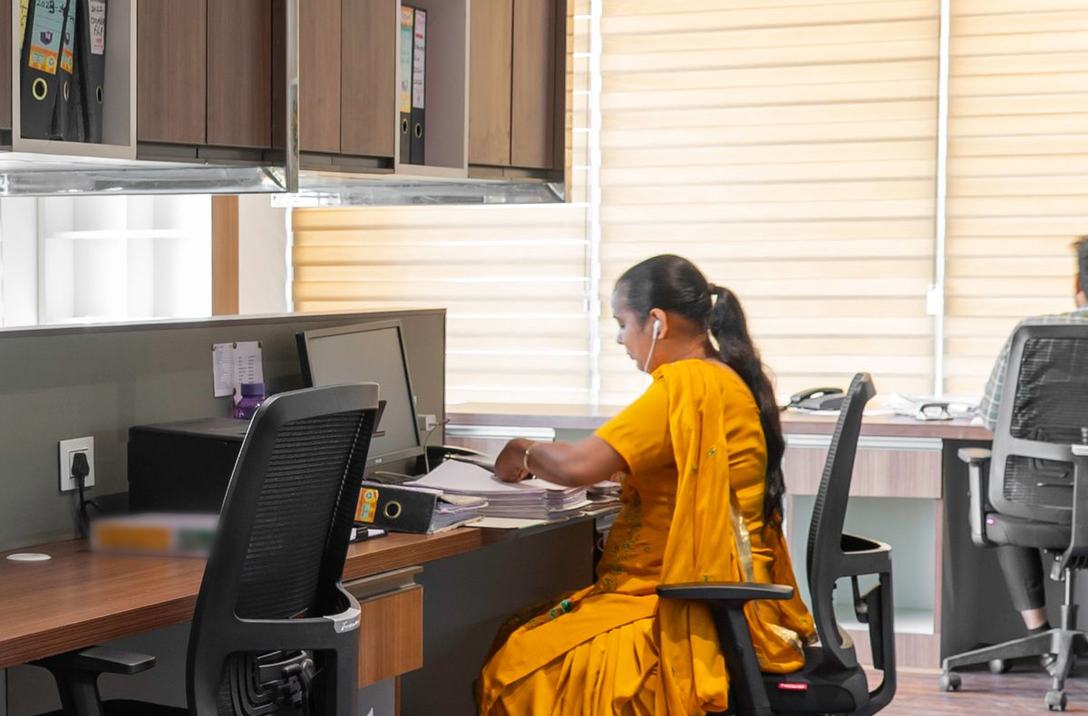
Why Outsourced 1065 Preparation in India Works for US Firms
Hiring partnership tax talent in India means you get strong alignment with US firms, significant cost savings, and the capacity your firm can't find in the US hiring market.
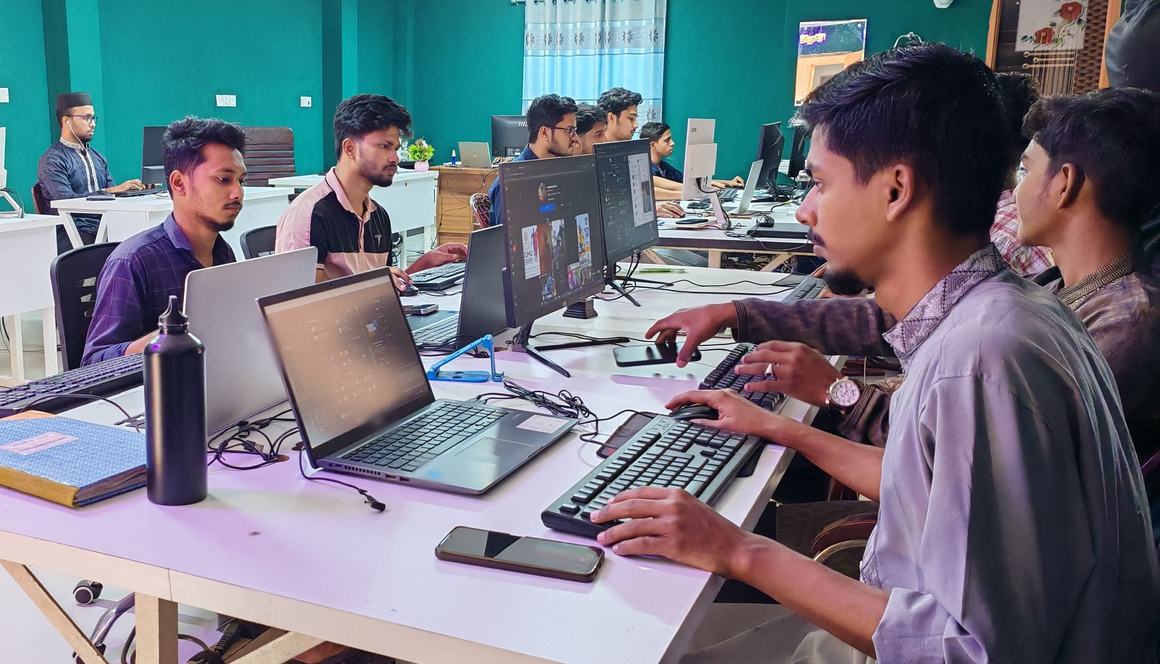
- Save up to 46% compared to equivalent US hires.
- Top talent trained on US tax, US GAAP, and IRS standards
- Communication style, work ethic, and professional norms that align with US teams
- Preparers who work in your tax software, ramped on your capital account conventions and K-1 procedures
Easily Hire Top Talent in India for Every Accounting Function
Tax preparers and reviewers vetted for US tax rules, the tax software your firm runs, and the workpaper discipline your reviewers expect.

Accountants vetted for US GAAP, the tools your team uses, and the judgment that comes with experience in the month-end close.

Bookkeepers screened for clean reconciliations, the ledgers your clients keep, and the follow-through that keeps every month current.

AP and AR specialists screened for accuracy, the payables and billing tools your clients use, and the follow-up that keeps cash moving.

Payroll specialists vetted for multi-state payroll, the filing calendar that comes with it, and the care a client's pay run deserves.

Analysts screened for reporting depth and the ability to turn the numbers into decisions your clients can act on.

Managers and controllers vetted for close ownership, review experience, and the ability to run the work without hand-holding.

Accountably's Partnership Tax Staffing and Recruiting Process
Hiring partnership tax talent doesn't have to be complicated. Accountably handles the entire process and makes offshore hiring as easy as hiring in the US.
1. Discovery call
We learn your firm, the role, and your preferences.
2. Kickoff & calibration
You meet your dedicated recruiter, align on the hiring process, and review sample profiles.
3. Receive your vetted shortlist
Receive your first candidates in 3-5 days.
4. Interview and hire
We coordinate everything. You just choose.
5. Onboarding support
We handle contracts, equipment, payroll, and compliance.
6. Ongoing support
We want to ensure talent retention. Start with 1-3 hires and add more as trust builds.



Skip the compliance research and cross-border payment headaches. We'll handle everything.
From first candidate to fully onboarded hire, we manage the whole process. Get access to top candidates in 3-5 days. Hire in under 3 weeks.
Start HiringFree to interview, only pay if you hire.
Partnership Tax Seat Rates When You Hire Through Accountably
We quote every seat before you commit. Below are example rates for the roles partnership tax work needs, next to what the same role pays in the US.
| Role | Works on | Accountably rate | Typical US salary |
|---|---|---|---|
| Business Tax Preparer | Form 1065 from the trial balance, tax basis capital accounts, K-1 production and tie-out | From ~$14/hr | $54,920 |
| Tax Preparer | Straightforward 1065s with K-1s, prior-year comparison, extension calculations | From ~$14/hr | $54,920 |
| Tax Reviewer | Senior review of every 1065, review notes, the K-1 heavy and basis returns | On request | $83,680 |
| SALT Specialist | State partnership returns, composite returns and PTET elections | On request | $83,680 |
From about $14 an hour, a full-time seat comes to roughly $2,400 to $2,500 a month. During your no-commitment discovery call, we'll quote the exact seat and explain what's included.
US salaries are BLS median annual pay for May 2025 (Tax Preparers; Accountants and Auditors).
With Accountably, there are never upfront costs.
Get Support for Every Step of Hiring
Accountably is your full-service staffing partner that makes offshore hiring easy.
We handle everything: sourcing, screening, onboarding, payroll, compliance and even equipment support.
Compliance
You don't need to set up a local entity or become an expert in Indian employment law. We handle it all.
Payroll
Accountably manages salary disbursement and cross-border payments for every hire you make with us. Your hires get paid correctly and on time.
Benefits administration
We help you design and manage a competitive benefits package, including healthcare, PTO, perks, and more.
Assessment support
We adapt to your assessments, interview stages, and evaluation criteria, so the candidates you see meet your bar.
On-the-ground support
Part of our white-glove approach is helping with the extras that matter. Your hire works from our secure workspace in Ahmedabad or Indore, with the equipment provided.
Background checks
Our reference checks go beyond "Did they work there?" We dig into how they solved problems, collaborated with teams, and delivered on deadlines.
What Clients Say About Accountably
Across client feedback, a few themes come up again and again from firms who have hired offshore talent with Accountably:
Growth without local hires
"Accountably felt like an invisible engine powering our growth."
Quality that surprises
"I was the biggest skeptic in the room when we discussed offshore. Six months in, I'm the biggest advocate. The quality of workpapers coming through is better than what we produced in-house, and my partners finally have time for client-facing work."
Room to grow
"As a solo EA, I was drowning in 1040s every season and turning away good clients. One dedicated offshore preparer changed everything. I doubled my client base and actually took a vacation in April for the first time in 12 years."
Your time back
"They matched our pace from day one. Returns came back clean, organized, and ready for review. It felt like we'd doubled our team overnight."
Zero disruption
"Three hundred and ten returns. Ten weeks. Zero missed deadlines. Zero client complaints. And our team actually went home at a reasonable hour for the first time in years."
Which Hiring Model Is Right for You?
Accountably offers three ways to staff your firm with talent in India. Dedicated hires and build-operate-transfer teams go through the same recruiting process, and a white-label team is staffed and run by its assigned manager. The difference is who runs the work once the team is in place.
| Compare | Dedicated Offshore Talent | White-Label Delivery Team | Build-Operate-Transfer |
|---|---|---|---|
| Day-to-day management | You assign the work. Accountably handles recruiting, training, and review | Our delivery manager runs the team | Accountably runs the unit, then hands it to your lead |
| Setup required | Access to your software and your SOPs. No SOPs? We build them with you | Send the work. The team delivers inside agreed turnaround windows | Accountably builds an exclusive team and management for your firm |
| Best fit for | Firms needing stable, round-the-year capacity | Smaller or seasonal firms whose volume spikes in busy season | Firms serious about long-term offshore control |
| Fee structure | Monthly invoice per seat, at an hourly or monthly rate | Per return for tax work; other work by scope | Custom, agreed on your discovery call |
| Onboarding support | Training on your software and SOPs, with mock returns before any live work | The team arrives with its own manager and reviewers | The unit, team and management included, is built and run for you, then handed over |
| Free replacement guarantee | 45-day | Doesn't apply. An assigned manager runs your team and is your single point of contact | Agreed on your discovery call |
Choose dedicated offshore talent if you have round-the-year work and want full-time staff inside your workflow.
Choose a white-label delivery team if your volume spikes in busy season and you'd rather review finished work.
Choose build-operate-transfer if you're serious about long-term offshore control.
Not sure which fits your situation? We'll explain all three options on your free discovery call.
Firms That Use Accountably's Partnership Tax Services
US firms of all sizes come to Accountably when they want to hire great partnership tax talent fast.
They usually don't want to figure out how to employ someone internationally. No entity setup, no compliance research, no payment infrastructure to build.
They just want a filled position and a partner who handles everything behind it.
Free to interview, only pay if you hire.
- Fast-growing CPA firms scaling partnership returns, K-1 production, or business tax work
- Mid-size firms building out partnership tax teams that have been only one or two people deep for too long
- Small and owner-run firms looking to extend their hiring budget further than US-only hiring allows
- Tax-focused CPA firms building delivery teams to match client demand
- Solo practitioners and EAs who are the lone preparer and reviewer on every 1065 and finally need to hand something off
- Firms with a large partnership book adding headcount in high-volume work (multi-member LLCs, K-1 packages, extensions) without the cost of US-based hiring at scale


Frequently Asked Questions
Accountably is a staffing and recruiting agency that helps US CPA, EA, and accounting firms hire talent from India across tax, accounting, payroll, and finance. Accountably offers offshore staffing services, placing full-time offshore employees from India who work inside your firm's workflow, on your software and SOPs.
Accountably places partnership tax professionals in India across the whole 1065 cycle, from the trial balance and the book-to-tax reconciliation to capital accounts, K-1 production, and the state filings that follow.
If a partnership tax role can be performed remotely, Accountably can fill it with A-players from India.
Here are some examples of the roles we can fill:
- Partnership returns: business tax preparers, tax preparers
- Review: tax reviewers
- State filings: SALT specialists
- The books behind the return: staff accountants, bookkeepers
Accountably's staffing model is fully managed: we handle the employment contract, payroll, tax compliance, benefits administration, and salary disbursement for every hire, so you get the talent without the administrative overhead.
This matters most for firms that don't have an established entity or employer of record (EOR) infrastructure in India.
You direct the day-to-day work; Accountably handles everything on the back-end.
Our staffing model also includes onboarding support, equipment coordination if needed, and ongoing HR support for as long as the engagement runs.
Dedicated hires and build-operate-transfer teams go through the same vetting and shortlisting process; a white-label team is staffed and run by its assigned manager.
The core difference between dedicated offshore talent and a white-label delivery team is who directs the work. With dedicated offshore talent, your tax preparer works inside your workflow and you direct the work like any member of your team; with a white-label delivery team, Accountably's manager runs the team, with its own reviewers, and you review the finished work.
Recruiting differs between the models. Dedicated hires go through the same recruiting process as build-operate-transfer teams, while a white-label team is staffed and run by its assigned manager.
Dedicated offshore talent is the right fit if you have round-the-year partnership work and want full-time staff inside your workflow.
A white-label delivery team makes more sense if your volume spikes in busy season and you'd rather review finished work. Firms serious about long-term offshore control can also choose build-operate-transfer.
If you're not sure which fits your situation, mention it on the discovery call, and the team will walk you through all three options.
Accountably quotes every partnership tax seat before you commit. Tax seats start from about $14 an hour, which comes to roughly $2,400 to $2,500 a month for a full-time seat. Senior seats, such as a tax reviewer who runs the senior and quality review stages, are quoted on request.
The rate can vary by role and seniority, so you will get the specific figures on your discovery call, where we will walk you through the total cost for the role you need to fill.
But even with Accountably's fee included, a partnership tax hire in India through Accountably can still save your firm up to 46% compared to an equivalent US hire.
For firms that don't have an existing international payroll setup or in-country legal infrastructure, the staffing model removes that work entirely. Accountably handles the employment contract, payroll processing, tax compliance, and benefits administration for your hires.
You direct the work. Accountably owns the employment relationship.
Also, with Accountably you pay nothing until you hire. The search, sourcing, shortlisting, and your interview stages all happen before any fee is due. If Accountably does not place someone, you owe nothing. A dedicated hire has a 60-day minimum commitment.
The 45-day replacement guarantee is included. If a placement does not work out within 45 days, Accountably finds a replacement at no additional charge.
Outsourced partnership tax return preparation is the practice of handing your partnership clients' Form 1065 work to a team outside your firm instead of hiring in-house preparers. That team builds the return from the trial balance, allocates each partner's Schedule K-1 under the partnership agreement, and maintains the capital accounts and partner basis that every later year depends on.
Form 1065 is an information return: the partnership itself pays no federal income tax, and its income, deductions, gains, losses, and credits flow through to the partners, who report their share on their own returns.
For a CPA or accounting firm, the work usually covers:
- Form 1065 and its schedules: B, K, L, M-1, M-2, and M-3 where required
- A Schedule K-1 for every partner, with income, deductions, and credits allocated under the partnership agreement
- Capital accounts maintained on the required bases: tax, GAAP, and Section 704(b)
- Partner basis tracking, including each partner's share of the partnership's liabilities
- Section 754 basis adjustments where an election is in place
- Schedules K-2 and K-3, prepared when they are required
- State, composite, and pass-through entity returns alongside the federal filing
Outsourced means the work is done by a team outside your firm. Offshore means that team is in another country. With Accountably it is both: your preparer sits in India and works inside your workflow like any other member of your team.
The main difference is cost. A partnership tax hire in India can save your firm up to 46% compared to a US-based equivalent, due to the lower cost of living in India compared to the US.
With dedicated offshore talent, your firm manages the day-to-day work. Your tax preparer reports to your managers, follows your workflows and processes, and works as part of your team, just like any other remote employee.
Accountably doesn't direct their daily work or assign client files. You have complete control over their responsibilities and schedules. Think of Accountably as the hiring and administrative partner, not a management layer.
If you'd rather review finished work than direct it, a white-label delivery team comes with Accountably's own manager and reviewers.
Yes, tax preparers in India working with US firms work in the same tools your team already relies on: UltraTax CS, CCH Axcess, Lacerte, Drake Tax, and ProConnect Tax for the return, and Karbon, TaxDome, and Suralink for workflow and client documents.
During vetting, Accountably screens explicitly for your stack rather than assuming tool familiarity and runs the assessments you already use.
Onboarding then ramps your preparer on your firm's software and SOPs, from your workpaper standards to your capital account conventions and K-1 procedures.
If there is a specialized system in your firm's environment, we identify transferable skill paths and flag any ramp time upfront so you can make an informed decision.
Accountably puts every candidate through a rigorous screening process before presentation.
Every candidate goes through Accountably's vetting process, which includes:
- Skills assessment: technical evaluation specific to the role requirements
- Experience validation: Accountably verifies work history
- Software experience: we check every candidate's experience in the tax software your firm files from, such as UltraTax CS, CCH Axcess, Lacerte, Drake Tax, or ProConnect Tax
- Cultural fit: Accountably screens for alignment with US business practices, work style, and your specific firm culture
- Motivation check: Accountably rules out candidates who are just looking for short-term contracts or salary bumps
- Background checks: we run background checks, and every hire works under an NDA
You only see candidates who meet all these criteria. Experienced hires start with onboarding on your software and SOPs. Newer hires first complete our 6-week US tax and accounting program.
Form 1065 is due by the 15th day of the third month after the partnership's tax year ends, which is March 15 for a calendar-year partnership. Filing Form 7004 grants an automatic six-month extension, moving a calendar-year deadline to September 15.
Your team prepares the extensions as part of the work, so no return slips past its due date. Partners can't finish their own returns until their K-1s are issued, so a late 1065 stalls every partner behind it.
The late-filing penalty is assessed per partner, for each month or part of a month the return is late, for up to 12 months, and separate penalties apply for failing to furnish a correct Schedule K-1 to each partner.
Yes, on a senior seat. Special allocations, targeted allocations, waterfall provisions, and multi-tier structures are traced back to the partnership agreement during preparation and checked against it at senior review.
Capital accounts are maintained year over year on the required bases (tax, GAAP, and Section 704(b)), with adjustments for contributions, distributions, and allocated income and loss, and each account is reconciled in workpapers the next reviewer can follow.
Where a valid Section 754 election is in place, the team computes the 743(b) adjustment on a transfer of a partnership interest and the 734(b) adjustment on certain distributions, at the asset level, with the related amortization and depreciation schedules.
The final judgment on every allocation and election, a 754 election included, stays with your firm. See business tax preparers for the seat levels.
Every file goes through preparer, senior, quality and final review before it reaches you:
- The preparer builds the 1065, allocates each K-1, ties out the capital accounts, and documents the workpapers to your SOPs.
- A senior reviewer re-checks the allocations against the partnership agreement, partner basis, debt allocation, and any 754 adjustment math.
- A quality reviewer runs the return against a standardized checklist and confirms the K-2, K-3, M-1, and M-2 tie-outs.
- A final review packages the return, the K-1s, and the workpapers for your partner, with every open question flagged in writing.
Your firm keeps the signature, the e-file under its own EFIN, and the final judgment on allocations, elections, and positions.
Yes, partnership files are handled under SOC 2-aligned controls by background-verified staff who work under NDAs.
Access is role-based and runs over a secure VPN, files move by encrypted exchange, audit logs record activity, and nothing is stored on a personal machine.
See data security and compliance for the full set of controls.
Resources for Partnership Tax Hiring
Guides to help you understand outsourced partnership tax work, set the right expectations, and hire a team that delivers.



Last updated
See how to evaluate an offshore accounting partner before you sign. Download the free guide now.
