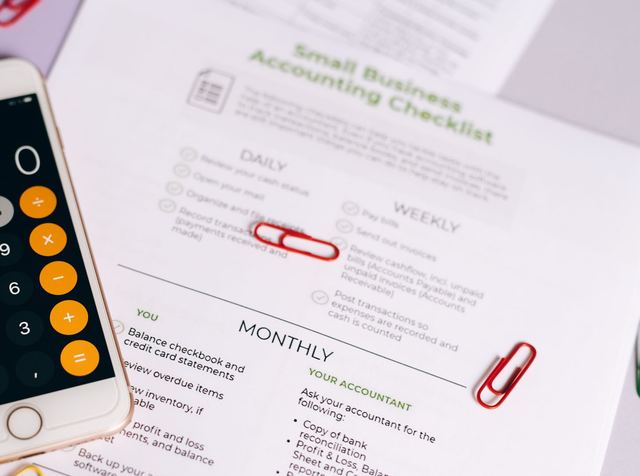

Account reconciliation services are usually quoted on the accounts that already behave. Bank, credit card, merchant processor: each has a statement behind it, so the work is a match against a document somebody else produced.
The accounts that rot are the ones with no statement at all, so check whether a quote names them. Sort the account list before you price anything, because that sort decides what the work is, what comes back, and how you grade it.
What Account Reconciliation Services Can Actually Reconcile
An account can be reconciled only when something outside the client's ledger states the balance. Everything else has to be substantiated instead, which is a different job producing a different file.
The reason sits in the profession's own view of evidence. The reliability of audit evidence depends on the nature and source of the audit evidence and the circumstances under which it is obtained, and generally the reliability of audit evidence increases when it is obtained from external parties because the information is less susceptible to management bias (AICPA, SAS No. 142, Audit Evidence, paragraph A22). That is written for auditors. It is also the reason a bank reconciliation settles an argument and an accrued liability schedule does not.
Sorted by where the outside record lives, a trial balance falls into three groups.
The record you can pull yourself. Bank accounts, credit cards, merchant processor accounts, loans and lines of credit, and payroll liability accounts backed by the provider's registers and filed returns. The balance sits somewhere reachable on a cycle you know in advance, which is why this group is usually the first work a firm hands over and the fastest read on whether a provider follows your process. It is also the group that matches the output test sorting which accounting tasks move at all.
The record somebody has to ask for. The vendor statements and customer confirmations behind payables and receivables, custodial and investment reports, and the counterparty ledger behind an intercompany balance. The record exists, but it arrives on somebody else's calendar, and in the intercompany case it comes from a party that is not independent of your client. Scope this group with the request written into it: who asks, by when, and what happens when nothing comes back.
No outside record at all. Accrued liabilities, prepaid amortization, deferred revenue, and suspense and clearing accounts. A clearing account holds a transaction between two steps of a process, and a suspense account holds items nobody has coded yet. Nothing outside the ledger states any of these balances, so there is nothing to tie to and no tie to grade.
| Account type | The outside record | How the balance gets proved |
|---|---|---|
| Bank, credit card, merchant processor | The provider's statement, on its own cycle | A tie, with every difference named on its own line |
| Loans and lines of credit | The lender's amortization or payoff statement | A tie, plus a check that principal and interest split the way the schedule says |
| Payroll liabilities | The payroll provider's registers and filed returns | A tie to the filing, then to the payment that cleared it |
| Receivables and payables | Vendor or customer statements, where they exist | Agreement between the sub-ledger and the control account, then an aged listing somebody has actually read |
| Intercompany | The counterparty's ledger, which is not an independent source | Matched pairs, a named owner on each side, and a difference threshold |
| Accrued liabilities and prepaids | None | A schedule that rebuilds the balance from its drivers, tested against what was paid afterwards |
| Deferred revenue | None that states the balance, since the contract sets the recognition pattern rather than the closing number | A roll-forward from opening balance through additions and recognition |
| Suspense and clearing | None | An item list, an owner per item, and a date by which the account returns to zero |
Receivables and payables are the row worth pausing on. Tying a sub-ledger, the detailed record sitting behind one control account in the general ledger, back to that control account proves only that the two agree with each other, and both can be wrong together. That is why the aged listing is the substantive part of the work rather than the tie.
How to Substantiate a Balance With Nothing to Tie To
Substantiation replaces the match with two things: a schedule that rebuilds the balance from its own inputs, and a later event that confirms the number was right.
Evidence rules point the same way. Where information is used as audit evidence, in some cases the reliability of such information may only be established when the related controls, whether manual or automated, including those over the preparation and maintenance of the information, have been tested and determined to be operating effectively (AICPA, SAS No. 142, Audit Evidence, paragraph A25). With no outside record in play, the credibility of the balance comes from how it was built.
Accrued liabilities. Rebuild the accrual from its driver, which is hours and a rate, a contract, a usage report, or the invoice that turned up after the period ended. Then run the confirming test: compare what was actually paid in the following period against what was accrued, and treat every gap as a question rather than a rounding artifact.
Prepaids and deferred revenue. Both are roll-forwards. Opening balance, additions, the amount released this period, closing balance, with the release rule written once and applied the same way each month.
Suspense and clearing accounts. These are queues, not balances, and their substantiation is a list rather than a total. Every item carries an owner and a date, and the account has a stated period inside which it returns to zero. The balance sheet walk that catches them in the first place belongs to the close itself.
Intercompany. Matched pairs, one named owner on each side, and a threshold under which a difference is written off rather than investigated. Without the owner on both sides, an intercompany difference becomes a debate about whose ledger is right, and it survives every close until somebody rebuilds the history.
What a Finished Reconciliation Has to Contain
A reconciliation is finished when a person who did not prepare it can accept it without asking a question. That is a test of what is in the file, not a judgment about the preparer.
The balance being reconciled. It comes off the closed ledger, named by account and period. A balance captured mid-close stops agreeing with the ledger as soon as the next entry posts.
The source, attached. The bank statement, the payroll register, the vendor statement, or the schedule that rebuilds the balance where no outside record exists, each carrying its own date and its own identity.
The comparison itself. Both balances and the difference between them, shown, rather than a bare assertion that the account agrees.
Every reconciling item on its own line. A reconciling item is any amount explaining why the two records differ, and each one carries its amount, the date it arose and the reason it is there.
An age and an owner against each open item. The age runs from the date the item arose, not from the date somebody last copied it forward, and the owner is a person rather than a team.
Preparer and reviewer marks with dates. Engagement files have their own version of this requirement, worked through for outsourced audit support, and the logic reaches any file a second person has to stand behind.
The test matters more when the preparer sits outside your office, because the file is the only thing your reviewer sees. Before a client file moves to an outside provider, the client is owed notice, and your firm needs either a confidentiality agreement with that provider or the client's specific consent. Which duty attaches to which kind of work is settled in what you can delegate to a back office.
Reconciled Is Not the Same as Explained
A tie is arithmetic. An explanation is a claim about why a difference exists and what event will remove it, and only the second one survives review.
So every reconciling item answers two questions rather than one. What is it, and what has to happen for it to disappear. An item with an amount and no expected clearing event is an unknown wearing a label.
That is why age belongs on the schedule next to the amount. Once an item passes the point where its clearing event should have happened, treat it as an error nobody has looked for yet rather than a timing difference.
Outstanding checks make this concrete. Under the uniform rule, a bank is under no obligation to a customer having a checking account to pay a check, other than a certified check, which is presented more than six months after its date, though it may charge the customer's account for a payment made after that in good faith (Uniform Commercial Code section 4-404). States enact their own version of that article, so the operative text is your client's state law.
Past that point the bank is no longer obliged to pay it, so it is no longer a timing difference you can count on clearing. Somebody has to decide whether to reissue it, void it and restore the liability, or start treating it as unclaimed property under the dormancy rules of the client's state. A reconciliation carrying the same stale check month after month is not reporting a timing difference, it is reporting that nobody has made that decision.
Writing a Reconciliation Scope That Can Be Priced and Graded
Price the account list, not the function. "Monthly reconciliations" is not a scope, because it does not say which accounts, and the accounts are the entire cost driver.
The account list, with a method against each account. Tag every account as tie, request, or substantiate. That tag usually predicts hours better than transaction volume does, since a substantiated account needs a schedule built and maintained whether or not anything moved through it.
A cadence per account. Not everything is monthly. Bank accounts may need a weekly touch in heavy months, deferred revenue often settles at quarter end, and intercompany needs a hard cut both sides observe. The delivery dates behind those cadences sit inside the wider close calendar and scope schedule rather than in a separate document.
What comes back with each reconciliation. The file contents above, plus two lists: the open items with their ages, and the questions the preparer could not answer alone. Naming the deliverable is the same discipline that makes a bookkeeping engagement quotable, applied account by account instead of once for the whole month.
An aging policy and a difference threshold. How old an item may get before it escalates to a named person, and what size of unexplained difference may be cleared without asking your firm. Write both before the first month, because they will otherwise be set by whoever is busiest in the delivery week.
Then grade the work on two counts your reviewer already produces. How many reconciliations were accepted without a question going back, and how many open items are past the aging policy this month compared with last. The second count is the one that catches accounts being closed by carrying differences forward, and it can move before a balance is wrong enough for anyone to notice.
What Your Reviewer Keeps
The provider produces the reconciliation. Your firm decides what it means, and four decisions stay on your side of the line.
The threshold is yours, because it sets how much unexplained difference the client's books may carry. Accepting an explanation is yours, since judging whether a stated reason is plausible needs somebody who knows the client's business.
Any correcting entry is yours to approve, and the approval mechanics for a ledger prepared outside your office are worked out in the prepared-by and approved-by split. Letting an item age past its policy is a decision as well, and it should be recorded as one rather than happening by default.
If your account list runs long and the reconciliation file is what your reviewer keeps rebuilding, don't trust us, test us. Accountably places trained offshore accountants inside US CPA and EA firms, and the low-risk start can be a trial task: a block of your own representative work, put through multi-layer review, so your reviewer grades real output before a client file depends on it.
Start With the Account List
The buying decision is not whether reconciliations can be handed off. It is which accounts you are handing off, and whether what comes back can be accepted by somebody who did not prepare it.
Take one client's trial balance this week and tag every account as tie, request, or substantiate. The accounts in the third column are where the engagement will actually be won or lost, and that tagged list is your scope, your price and your grading sheet at the same time.
This article is educational, not tax advice. Rules change, and states differ. Confirm thresholds, deadlines, and elections against the current IRS instructions for your year and facts.