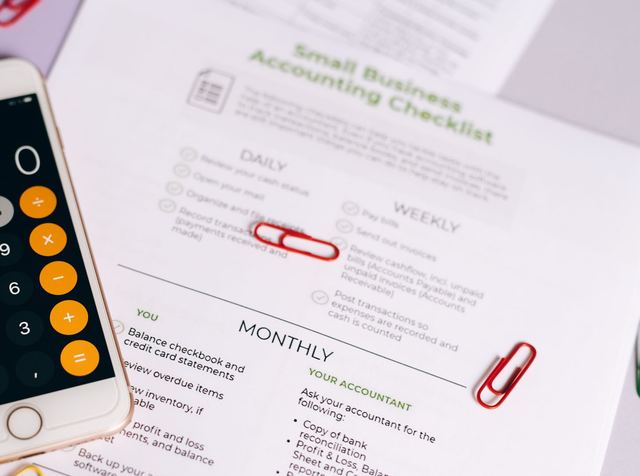

A bookkeeping checklist aimed at firms is usually the month-end close under another name. The daily and weekly versions are written for an owner keeping their own books, at one business's volume. Neither describes what a firm actually runs, which is the work between closes, across a room of clients whose volumes are nothing like each other. That cadence decides whether the close week is short, and it is usually the part nobody has written down for the client it belongs to.
What a Bookkeeping Checklist Between Closes Is For
The between-closes cycle keeps a client's ledger current while the period is still open, so that closing it becomes arithmetic instead of archaeology.
The distinction is worth holding because the two jobs do different work. A close checks whether the ledger is complete and correct. The cycle in front of it is what makes the ledger complete in the first place, and the first step of the seven-step close is confirming that the cycle did its job. When it did not, the first days of the close go looking for documents instead of numbers, and a firm reads that as a close problem when it is a cadence problem showing up late.
Transaction coding is the term doing most of the work here. It means assigning each bank, card, and payment-processor line to an account in the chart of accounts, and it is the work that gets harder the longer it waits, because the context that identifies a line fades faster than the line does.
Cadence Is Set by the Client's Transaction Volume
There is no correct frequency for bookkeeping tasks. There is a correct frequency for each client, and it comes from what that client's ledger actually receives.
The published checklists hand you a fixed daily, weekly, and monthly grid. That grid describes one business's volume. A client with card spend across several locations and a payment processor writing new lines every day cannot be coded once a week without somebody losing the thread on what a line was. A client with one bank account and a short list of invoices each month does not need daily attention, and giving it daily attention is how a fixed fee stops being profitable.
Use one test to set the pace. How long can transactions sit before the person coding them can no longer tell what a line is without asking the client? That interval is the cadence for that client, and it belongs in the client's file rather than in a preparer's habit.
Two things then adjust it. The first is the deadlines the client already carries, since a client that files sales tax monthly needs its taxable sales reliable before every filing date, whether or not a close runs that month. The second is who does the work, because a cadence one experienced person holds in their head is not a cadence a second person can be handed.
The Daily Loop: Feeds, Coding, and Documents
For a high-volume client, the daily loop has one job, which is to keep the ledger no more than a day behind reality. Four items do that.
Review the feeds. A bank feed is the automated connection that pulls transactions from a bank, card, or payment processor into the ledger. Feeds fail quietly, and a feed that stopped delivering looks identical to a quiet week until somebody checks. The daily version of this is small: confirm each feed delivered, and confirm that a feed showing nothing is a client with no activity rather than a broken connection.
Code what arrived. Work the day's lines to the chart of accounts, and park anything genuinely unclear in one named holding place rather than guessing. A parked item is a question for the client. A guessed item is an error nobody will ever look for again.
Capture the documents while they still exist. The invoice or receipt behind a transaction should attach when the transaction posts. Finding it that day is a message to the client. Finding it during the close is somebody's afternoon, and finding it after the period is archived usually means asking the client to reproduce it. How long the records then have to survive is a separate question, settled in how to outsource bookkeeping.
Check the cash position. Not a cash flow report. Confirm that what the ledger says the client holds today matches what the bank says, because a difference found on the day has an obvious cause and the same difference found at the close does not.
The Weekly Loop: Receivables, Payables, and Coding Quality
The weekly loop catches what a daily pass structurally cannot see, because these are patterns rather than events.
Refresh the aging and work the top of it. An accounts receivable aging report groups unpaid invoices by how long they have been outstanding. The rhythm matters more than the format, because an aging refreshed weekly gives the client time to act on an invoice while acting on it is still routine. Which of those follow-ups a firm keeps for itself is a different decision, and it is drawn in accounting tasks to outsource.
Bring the payables queue to a decision. Bills entered, coded, and matched, presented as a queue the client approves. The preparation is weekly work. The release is not, and it stays with the client.
Re-read a sample of the week's coding. You are not hunting one wrong transaction. You are checking whether a rule was applied wrongly across many of them, which is the error a reconciliation will never surface, because a miscoded line still ties to the bank.
Confirm the holding place is shrinking. Parked items are only useful if they get answered. A queue that only grows is a client communication problem, and it arrives later as a close delay.
The Standing Calendar: What Recurs Whether or Not You Close
Some of a client's obligations run on a schedule set outside your firm. They do not move because your close moved, and they are the part of the checklist most likely to live nowhere.
Sales Tax Filing Frequency Is Assigned, Not Chosen
A client does not pick how often it files sales tax. The state assigns the frequency, and it reassigns it when the client's volume moves.
California states the rule plainly. The department "assigns a filing frequency (quarterly prepay, quarterly, monthly, fiscal yearly, yearly) based on your reported sales tax or your anticipated taxable sales at the time of registration" (California Department of Tax and Fee Administration). The same page adds the rule that catches dormant clients, which is that a filing is required on or before the due date even if there are no sales to report.
New York publishes the thresholds that move a filer between frequencies. A quarterly filer whose total tax due for the four most recently filed quarterly periods is $3,000 or less may be reclassified as an annual filer. An annual filer whose total sales and use tax due exceeds $3,000 during the annual filing period may be reclassified as a quarterly filer, with the change taking effect the quarter after that annual period. A filer whose combined total of taxable receipts, purchases subject to tax, rents, and amusement charges is $300,000 or more in a quarter has to begin filing monthly returns from the first month of the next quarter. In each case the Tax Department notifies the filer of the change (New York State Department of Taxation and Finance).
Two states, two mechanisms, and the same instruction for your file. Filing frequency is a per-client fact with an effective date, it can change on the state's initiative rather than yours, and the notice announcing the change is sent to the filer, which means to your client.
The move back down is not symmetrical. A New York filer pushed onto monthly returns has to keep filing monthly until its taxable sales are less than $300,000 each quarter for four consecutive quarters, and only then may it contact the Tax Department to request a change to quarterly filing status (New York State Department of Taxation and Finance). That one starts with a request from the filer, not a notice from the state, so a client whose volume dropped back stays on monthly returns until somebody asks.
Record the current frequency, record where it came from, and ask about it whenever the client's volume moves.
The Payroll Deposit Schedule Is Set Before the Year Begins
If your client runs payroll, its federal deposit schedule is settled before the calendar year starts, out of the taxes it reported during an earlier period the IRS defines as the lookback period. The two schedules, monthly and semiweekly, and the deadlines that follow from each are worked through in the payroll deposit due dates.
One event moves that schedule mid-year. On a day when $100,000 or more in taxes accumulates, the deposit is due the next business day, and a monthly schedule depositor becomes a semiweekly schedule depositor from the following day for at least the rest of that calendar year and the following one (IRS, Publication 15). So the schedule in the client's file carries a condition rather than only a date, and a single heavy pay day is what changes it.
What the between-closes cycle owes payroll is narrower than the deposit itself. Each run has to be recorded in the period it belongs to, and the liability accounts have to agree with what was actually withheld and remitted, so the ledger balance is a check on the deposit rather than a copy of it. A payroll journal posted weeks late is not only a close problem. It is a check nobody ran while there was still time to act on the answer.
Vendor Files and W-9s Are a Year-Round Job
The vendor file is the between-closes item whose failure surfaces furthest from the mistake.
Form W-9 is how a payee gives its correct taxpayer identification number to the party required to file an information return reporting income paid to it (IRS, About Form W-9). The reporting thresholds it eventually feeds, and the January run that consumes it, are already set out in accounting tasks to outsource and in year-end accounting services. The cycle job is smaller and it runs all year: every new vendor gets a complete file before the first payment goes out, and payment types are coded as they post, so the year-end extract can be pulled rather than rebuilt.
The test for whether this is working is not how full the vendor file looks in December. It is whether a vendor added in June was complete in June.
Where the Monthly and Annual Work Picks Up
The monthly close starts where the daily and weekly loops stop, and it runs its own sequence, set out in the month-end close checklist. The work that exists only once a year, the information-return run and the book-to-tax bridge among it, sits in year-end accounting services.
Write It Down Per Client Before You Delegate It
A between-closes checklist that lives in one person's head cannot be delegated and cannot be graded. Those are the same problem, and writing it down is what solves both.
The written version needs three things on every line. It needs the cadence with the reason attached, whether that reason is transaction volume, an assigned filing frequency, or a deadline the client carries. It needs a named owner and a description of what exists when the line is done, because "review the feeds" is a task and "every feed confirmed delivered, exceptions listed" is a result somebody else can produce. And it needs the standing calendar dates recorded with their source, so the next person can see which state assigned a frequency and when a schedule was determined.
Once that file exists, a week of a preparer's work can be checked against it quickly, and the checking is where the value sits. A firm that can grade the between-closes work can expand what it hands over on evidence. A firm that cannot is choosing between doing everything itself and trusting a summary, and the mechanics of the handover, from access to the exit, are covered in how to outsource bookkeeping.
If your firm is carrying this cycle across a book of clients and the daily loop is the first thing to slip, don't trust us, test us. Ask for a trial task on a block of your own representative work, graded by your own reviewer, before any client file moves.
Start With One Client and One Week
Pick the client whose close is worst. Write the between-closes checklist for that one client, with a cadence against every line and a named owner beside it, then run it for a week before changing anything else.
The week grades the cadence for you. If the daily pass finds nothing three days running, it is too frequent for that client and the time belongs somewhere else. If the weekly pass keeps surfacing transactions nobody can identify, it is not frequent enough, and the close was always going to pay for that.
This article is educational, not tax advice. Rules change, and states differ. Confirm thresholds, deadlines, and elections against the current IRS instructions for your year and facts.