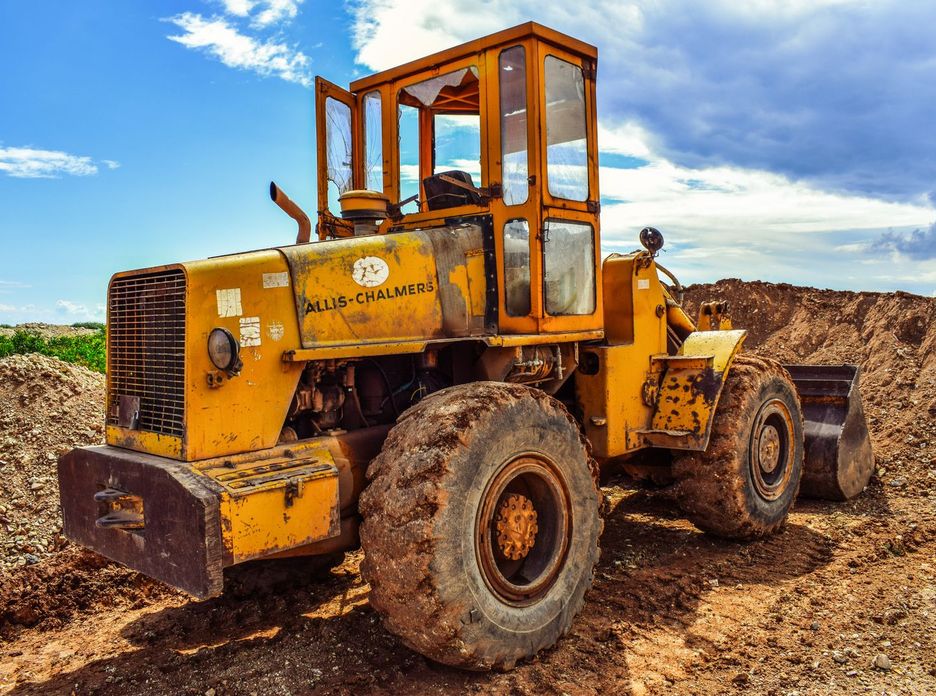
Equipment is an asset. It is a tangible resource a business holds to use in its own operations rather than to sell, so it sits on the balance sheet under property, plant and equipment and its cost is charged against income across the years it serves. What it is never is a current asset, and that single classification rule settles most of the confusion around the question.
Two things can change the answer, and neither of them is the presence of a loan. A purchase too small to meet the entity’s capitalization threshold never becomes an asset at all, and the same physical object held for a different purpose is classified as something else entirely.
Why Equipment Sits Below the Current Line
The current asset class turns on what will be realized in cash, sold or consumed during the normal operating cycle of the business (ARB No. 43, Chapter 3A, paragraph 4), a test current assets works out in full. Equipment is bought to be used for years rather than realized, so it fails that test on its face.
The bulletin does not leave it to inference. The concept of the nature of current assets contemplates the exclusion from that classification of such resources as land and other natural resources, and depreciable assets (ARB No. 43, Chapter 3A, paragraph 6). Equipment is a depreciable asset, so it is excluded by name rather than by inference.
That exclusion is why a working capital or quick ratio calculation never improves because a firm bought a server. The purchase moves cash, which is current, into equipment, which is not, so the ratio falls.
The Purchase Only Becomes an Asset Above a Threshold
Not every equipment purchase produces an asset. Entities set a dollar floor below which an item is expensed on the spot, and the floor is a policy choice rather than a figure any standard fixes. The Federal Reserve publishes its own, which makes it a useful worked example of how such a policy reads: equipment with a cost of $10,000 or more must be capitalized using the individual asset method, and equipment with a purchase cost below $10,000 should be expensed (Federal Reserve, Financial Accounting Manual, Property and Equipment).
The same policy shows why quantity can override unit cost. If equipment costs less than $10,000 for an individual item but significant quantities are acquired, and the total purchase exceeds $100,000, then the purchase may be capitalized (Federal Reserve, Financial Accounting Manual, Property and Equipment). Twenty laptops bought at once can land on the balance sheet where one laptop would not.
A client’s own threshold governs its own books, and it is the first thing to establish before answering whether a given invoice created an asset. The broader capitalize-or-expense decision, and where the resulting balance appears under Regulation S-X, are worked through in fixed assets.
A Loan Does Not Make Equipment a Liability
The claim that equipment can be both an asset and a liability circulates widely, and it is a misreading of the accounting equation rather than an accounting position. Buying a machine with borrowed money creates two separate records: the machine, which is an asset, and the obligation to the lender, which is a liability. Neither one is the other, and neither one cancels the other.
The bulletin classifies the borrowing on its own terms, not by reference to what it bought. Short-term debts arising from the acquisition of capital assets are current liabilities, alongside serial maturities of long-term obligations (ARB No. 43, Chapter 3A, paragraph 7). So a five-year equipment note splits, with the portion due inside the year sitting in current liabilities and the rest below, while the equipment itself sits in property, plant and equipment for its whole life regardless.
Sell the machine and repay the note, and both records disappear independently, at amounts that have no reason to match.
When the Same Object Is Not Equipment
Classification follows purpose, so an identical machine can be three different things on three different balance sheets.
Held for use in operations, it is equipment. Held for resale by a dealer that sells machines, it is inventory, which is a current asset because it is expected to be sold during the operating cycle. Held under a lease rather than owned, the tenant records a right to use the underlying asset instead of the asset itself, which is the balance described in right of use asset.
The practical consequence is that the invoice never settles the question. What the business intends to do with the item does.
Common Questions
What Type of Asset Is Equipment?
A tangible, noncurrent, depreciable asset. Tangible because it can be seen and touched, noncurrent because it will not be realized inside the operating cycle, and depreciable because its cost is spread across its useful life. How those three labels differ from each other, and which one answers which question, is set out in tangible assets.
Where Does Equipment Go on a Balance Sheet?
In the noncurrent section, inside property, plant and equipment, shown at cost less accumulated depreciation. The contra balance that sits beneath it is covered in accumulated depreciation.
What Is the Difference Between Equipment and Assets?
One is a member of the other. Assets is the whole class of resources a business holds, and equipment is one category inside it, sitting alongside cash, receivables, inventory and buildings. Asking whether equipment is an asset is asking whether a category belongs to the class that contains it, which is why the answer is always yes and the useful question is which kind.
Accountably places trained offshore accountants and tax preparers inside US CPA and EA firms, and a firm can put a block of its own fixed asset and close work through a trial task so its reviewers stay on the judgment calls.