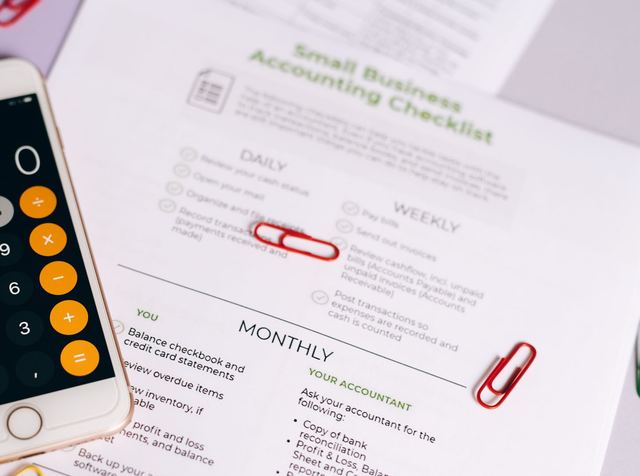

A monthly close has a release valve. You can give one client a delivery date early in the month and another a date late in it, and the queue stops colliding.
Year-end has no equivalent. The date belongs to the client's tax year rather than to your delivery schedule, and most of your clients share the same one.
That single constraint decides how year-end accounts outsourcing has to be bought: not what a provider is capable of, but when it has to be in place and which engagement pays for it.
Year-End Accounts Outsourcing: The Short Answer
Year-end accounts outsourcing is the handoff of the closing work behind a client's annual statements, meaning the lead schedules, the tie-outs, the comparative figures and the draft statement set, to an external team that prepares them for your firm's review. The parts of that pack that exist only because a year is ending are set out in year-end accounting services.
Two conditions decide whether it helps. The pack has to be scoped and billed as its own engagement, separate from the recurring monthly service. And the provider has to be running on the client file before the window opens, rather than being hired into it.
Miss the first and year-end work gets absorbed into a monthly fee that was never priced for it. Miss the second and you spend the window teaching someone a client's history instead of receiving output.
Why the Year-End Window Cannot Be Staggered
The date is set by tax law rather than by your engagement letter, and for most closely held clients that law points at December.
Start with what a calendar year is. It runs 12 consecutive months from January 1st to December 31st, and a taxpayer must adopt it if it keeps no books or records, has no annual accounting period, has a present tax year that does not qualify as a fiscal year, or is required to use one by a provision in the Internal Revenue Code or the Treasury Regulations. Individuals generally must adopt the calendar year as their tax year (IRS Publication 538).
Pass-through clients then inherit that default from the people who own them. A partnership must conform its tax year to its partners' tax years unless it elects a different year under section 444 of the Internal Revenue Code, elects a 52-53-week year tied to its required year or its section 444 year, or establishes a business purpose for a different period (Publication 538).
The required year then runs down a short ladder. Where one or more partners with the same tax year own a majority interest, meaning more than 50% of partnership profits and capital, the partnership uses their year. Where there is no majority interest tax year it uses the year of all its principal partners, a principal partner being one with a 5% or more interest in profits or capital, and where the principal partners do not share a year it generally uses the tax year producing the least aggregate deferral of income to the partners, meaning the year that defers their income least once each partner's share is counted (Publication 538).
An S corporation gets a shorter list still. It must use a permitted tax year, which means the calendar year, a year elected under section 444, a 52-53-week year ending with reference to either of those, or any other year for which the corporation establishes a business purpose (Publication 538).
That election is narrower than it looks. An entity retaining its existing year can generally elect only if the deferral period of the new tax year, meaning the number of months between the beginning of the retained year and the close of the first required tax year, is 3 months or less (Publication 538).
Nor can a firm move a client's year-end to smooth its own workload. Generally you have to file Form 1128 to request IRS approval to change a tax year, with the exceptions set out in that form's instructions (Publication 538).
Then the filing dates stack the work rather than spreading it. Form 1065 and Form 1120-S are each due on the 15th day of the 3rd month after the tax year ends, and each partner or shareholder has to receive their Schedule K-1 by that same date. Form 1120 and Form 1040 fall on the 15th day of the 4th month (IRS Publication 509).
Read those two dates together and the shape of the season appears. Your business clients' packs feed returns due on one date, and the K-1s coming out of those packs feed individual returns due a month later, so a slipped pack moves more than one deadline. Staggering by delivery date, the move that keeps a multi-client month-end close from collapsing, has nothing left to move here.
Extending does not release the pressure either. An extension generally moves the filing and leaves the payment on the original date, a split your workflow record has to represent correctly and your capacity plan has to choose deliberately. An owner's balance due cannot be computed from books that are not close to final, and extending the entity return does not move that owner's payment date, so the accounting behind an extended pass-through return cannot wait for the extended filing date. Extension buys assembly and review time. It does not buy accounting time.
What a Provider Can Actually Produce for a Year-End Pack
The work that sits upstream of the judgment transfers, because the pack is mostly assembly and assembly is checkable against something.
Lead schedules. A lead schedule is the single page that groups the general ledger accounts making up one financial statement line and agrees their total to the trial balance. Building them is mechanical once the chart of accounts is mapped, and the mapping itself is worth handing over, because it is the piece that has to survive from year to year.
Tie-outs. A tie-out is the cross-reference proving that each figure on the draft statements traces back to the trial balance and then to the support behind it. This is the highest-volume, lowest-judgment work in the pack, which makes it both the first thing worth moving and the easiest thing to grade when it comes back.
Prior-year comparatives. The comparative column has to agree to what was filed and issued last year, including any adjustment posted after that year was closed. A provider can build the bridge and prove it. Only your firm decides how a prior-period correction is presented.
The draft statement set. Statements, note disclosures and the supporting schedules behind them can all be drafted externally. What the statements assert stays with your firm, along with whatever your firm attaches to them on the way out, and that same boundary runs through the ledger process in record to report services.
The tax package. This is the trial balance, the supporting schedules, the fixed-asset rollforward and the reconciling items, assembled for whoever prepares the return. The assembly transfers. The positions inside it do not.
What stays behind is a short list, and it is the part your name sits on: the accounting positions taken during the year, the presentation choices, and everything your firm's name goes on when the pack leaves the office.
The Engagement Letter Split That Keeps Year-End Work Billed
Year-end work gets absorbed because nothing in the paperwork says it is separate. A monthly service that has run quietly for a year looks, from the client's side, like it should also produce the annual statements, and by the time anyone tests that assumption the window is open and the only choices left are absorbing the work or sending a surprise invoice.
Settle it when the engagement letter is written. The year-end scope is either a second engagement or a clearly separate scope and fee inside one, and it has to name five things.
The deliverable list, item by item. Lead schedules, tie-outs, comparatives, the draft statement set, the tax package, and anything your firm expects to be different from last year. A scope that says "year-end accounts" names nothing.
What has to arrive from the client, and by when. The pack does not start on a date, it starts on inputs. Name the inputs, name the person on each side who chases them, and write down the date the chasing begins rather than the date it becomes urgent.
The date the pack is due to whoever prepares the return. That is a different date from the filing deadline, and it is the one the provider works to. A scope carrying only the statutory date hands the gap between the two to your reviewer.
How prior-period work is priced. Cleanup, catch-up periods and corrections to a year already closed are projects with prices of their own. Leave them unpriced and you will perform them for nothing, in the weeks you can least afford to.
What happens when the client is late. The scope should say which of three things moves: the delivery date, the fee, or the deliverable. If it says nothing, what moves is your reviewer's last week.
Two related questions belong in the same document rather than in a later argument. Whether your firm is engaged to prepare a client's financial statements at all, and what that engagement pulls in with it, sits inside the client accounting services scope decision. And where the same client's return information will reach a preparer outside the United States, a signed consent has to exist before anything moves, on the terms set out with the tasks that transfer and the duties that cannot.
Onboarding Lead Time: Be on the File Before the Window Opens
The second condition is the one firms discover late. A provider hired inside the window is not capacity, it is another thing to supervise during the weeks you had least room to supervise anything.
The first useful year-end hour sits behind two lead times, and firms tend to budget for neither.
The first is the ramp. Accountably places trained offshore accountants and tax preparers inside US CPA and EA firms and ramps them on the firm's own software and SOPs in under 3 weeks. That clock only starts once the paperwork ahead of it has closed, and that waiting belongs to your clients' consents and to IRS processing rather than to any provider's onboarding team, which is why the onboarding calendar gets built backwards from the deadline.
The second lead time is the client file itself, and almost nobody budgets for it. The first year-end a provider runs on a client is the expensive one, because opening balances have to be proved against someone else's closing work and the comparative column has to be rebuilt rather than rolled forward. That work is not year-end work, and doing it inside the window means doing it badly and then doing it again.
So the useful sequence runs the other way round from how firms tend to buy. Put the provider on the monthly cycle first, on a small number of clients, and let the year-end pack be the continuation of a file the team already knows. A firm that starts in the quiet months reaches the window with a known team on known files. A firm that starts in the window gets neither.
When the Year-End Pack Should Stay In-House
Some engagements should not move this year, and saying so early costs far less than discovering it in March.
Keep the pack in-house when the monthly work behind it is not disciplined enough to hand over, because a year-end pack is only as transferable as the closes underneath it. Keep it when the client has not consented and will not, since no commercial argument survives that. Keep it when your constraint is review rather than preparation, because a bigger stack of drafted packs does not create reviewer hours. And keep it when your firm also performs an attest engagement for that client and the independence analysis has not been done.
Those four checks are a narrower version of the broader test for whether outsourcing fits your firm at all, applied to one deliverable and one window.
If your firm is carrying that pack across a book of clients whose year-ends mostly land together, don't trust us, test us. The low-risk way to start can be a trial task, a block of your own representative work put through multi-layer review, so your reviewer grades real output before a year-end file depends on it.
Decide the Scope Before the Calendar Decides for You
Year-end accounts outsourcing is not a harder version of the monthly close. Part of it is the close run once more, part of it exists only because a year is ending, and all of it lands on a date the client's tax year already fixed, for a book of clients who mostly share it.
Two decisions carry the whole thing. Write the year-end pack into its own scope with its own fee, and get the provider onto the file in a month that is not the window.
Pick the client whose pack ran latest last year. Write down the date their inputs actually arrived, then count backwards from the filing date to the day a provider would have had to be on that file to make any difference. That date, rather than a rate card, is what decides whether this year goes differently.
This article is educational, not tax advice. Rules change, and states differ. Confirm thresholds, deadlines, and elections against the current IRS instructions for your year and facts.